
Quick summary: A first Seoul trip works best when you choose a practical hotel area, plan the first 72 hours around nearby neighborhoods, and avoid overloading each day with cross-city movement. For most visitors, Myeongdong, Euljiro, Jongno, Hongdae, and Gangnam each solve different travel problems. Pair one clear base with a realistic 3-day plan, a working map app, a transport card, and a simple airport-transfer route.
Best first decision: choose your hotel area by airport access, subway convenience, evening food, and trip style.
Best itinerary habit: group sights by area instead of crossing Seoul multiple times per day.
Best backup: know your nearest station exit, taxi option, and convenience store before your first evening.
Short answer: how should first-time visitors plan Seoul?
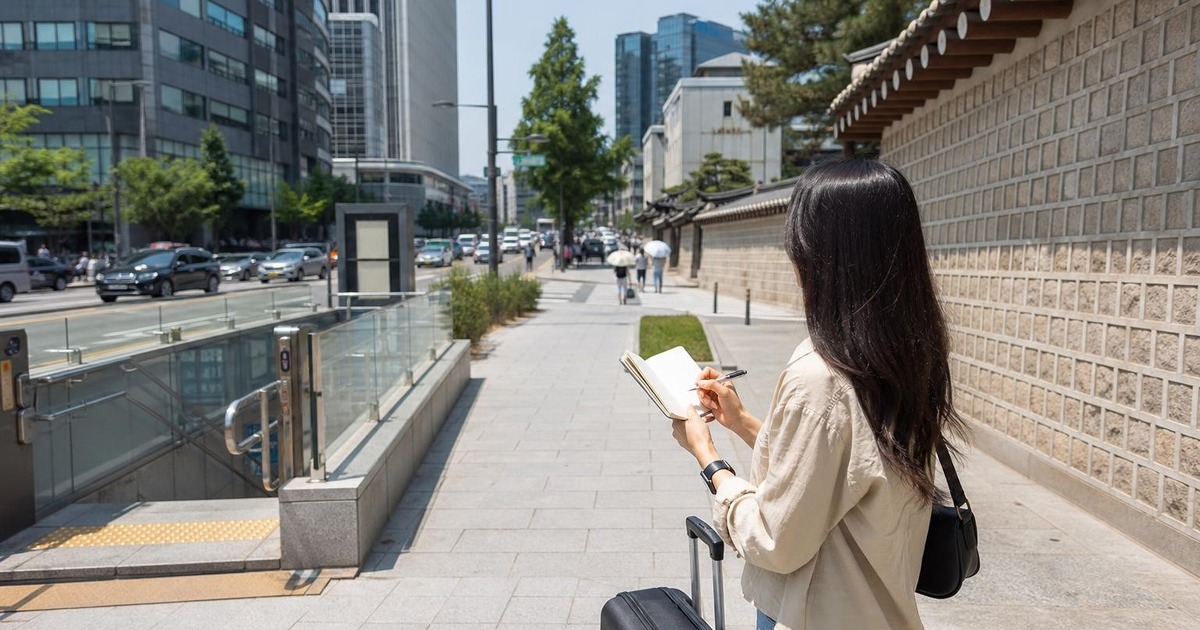
First-time visitors should plan Seoul around a base area, not around a long list of attractions. Seoul is large, transit is good, and neighborhoods feel different, so the best first trip usually combines one convenient hotel base with clustered daily routes. A practical plan beats an ambitious plan that sends you from palace to cafe street to river park to market to nightlife in one day.
For most first-time visitors, the core trip structure is simple: arrive smoothly from Incheon Airport, spend the first day near the hotel and central Seoul, use one full day for palaces, hanok streets, and markets, then use another day for neighborhoods such as Hongdae, Seongsu, Gangnam, or the Han River depending on your style. Add day trips only after the Seoul basics are stable.
Choose your Seoul base by trip style
Area | Best for | Main tradeoff | Related guide |
|---|---|---|---|
Myeongdong / Euljiro | First-timers who want central access, shopping, street food, and many hotel choices | Touristy streets and busy evenings | |
Jongno / Insadong | Palaces, hanok streets, older Seoul, walkable culture days | Some evenings are quieter than nightlife areas | |
Hongdae | Cafes, casual nightlife, youth culture, direct AREX access | Can be noisy and spread out with luggage | |
Gangnam | Business, shopping, clinics, southern Seoul plans | Less convenient for palace-heavy first trips | Gangnam airport route guide coming next |
Seoul Station | Rail trips, airport rail, KTX, short stays | Not always the most atmospheric base |
The best area is not universal. A palace-and-market traveler may prefer Jongno. A shopping-and-food traveler may prefer Myeongdong or Euljiro. A cafe-and-nightlife traveler may prefer Hongdae. A traveler using KTX may value Seoul Station more than someone staying only in Seoul.
Plan the first 72 hours before adding extras
The first 72 hours in Seoul should reduce friction, not maximize attraction count. Arrival day is for getting from the airport, checking in, testing your transport card, finding food nearby, and saving your nearest station exit. The first full day should cover central Seoul in a logical walking-and-transit cluster. The second full day can add a contrasting neighborhood.
This rhythm helps visitors avoid the most common first-trip mistake: trying to see every famous district before understanding how long Seoul movement feels. A palace morning, Insadong or Bukchon walk, market lunch, and Myeongdong evening can work because they are geographically coherent. Palace morning, Gangnam lunch, Hongdae afternoon, and Dongdaemun late night is technically possible but often tiring.
Use the Seoul first 72 hours guide for arrival pacing and the Seoul 3-day itinerary for a practical route structure.
Airport transfer shapes your first impression
Your Seoul trip starts before you reach Seoul. The airport transfer should match your hotel area, luggage, arrival time, and tolerance for transfers. AREX can be excellent for Hongdae and Seoul Station. Airport limousine buses can be easier for many hotel districts when the stop is close. Taxi or k.ride can be the most practical choice for late arrivals, families, or heavy luggage.
Do not choose the airport route from a single travel-time number. Door-to-door effort matters more than terminal-to-station speed. If your hotel is a ten-minute walk from a subway exit with stairs, a bus stop outside the hotel may be better. If your hotel is near Hongik University Station, AREX all-stop can be simple. If you are landing after a long flight with children, a taxi may be worth the cost.
Route-specific guides are already available for Incheon Airport to Myeongdong and Incheon Airport to Hongdae.
Use Seoul transit with station exits in mind
Seoul public transportation is extensive, but first-time visitors should pay close attention to station exits and final walking routes. The right exit can save time, stairs, road crossings, and confusion. The wrong exit can turn a short route into a frustrating first impression, especially with luggage or in bad weather.
Use Naver Map or another Korea-ready app for walking approaches, subway exits, bus stops, and place search. Keep Google Maps or Apple Maps as a broad planning backup if you like, but do not rely on them alone for Korea-specific route details. Save hotel, stations, and key restaurants before you leave your hotel Wi-Fi.
For setup, use How to use Naver Map in Korea and Korea travel apps to install before landing.
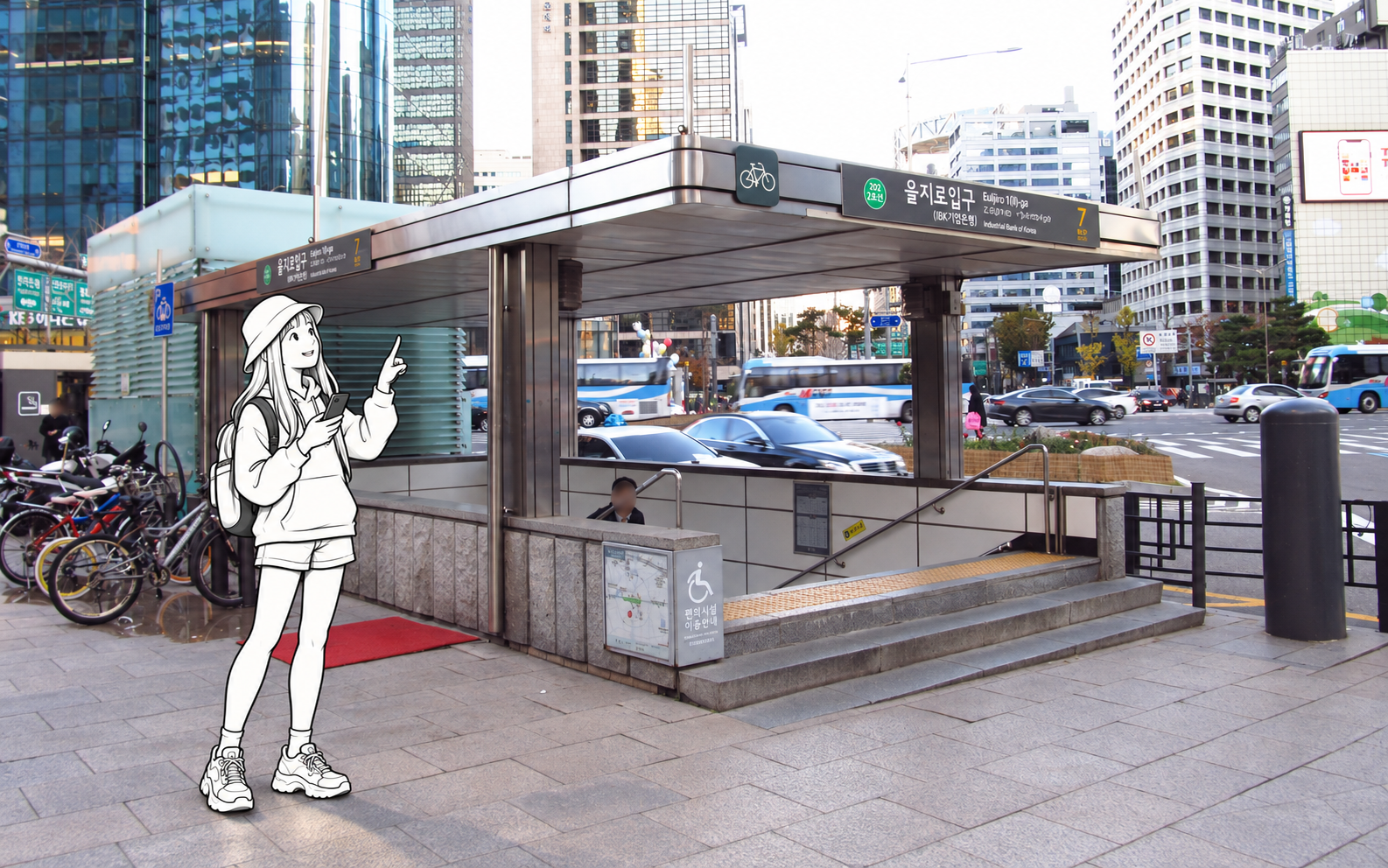
Save the station exit and final walking route, not just the station name.
AI-assisted photo-based composite. Station entrance source photographed 2018. It is not evidence of current exit works or a step-free route. Background: Seoul-metro-202-Euljiro-1ga-station-entrance-7-20181122-080052.jpg by LERK / Wikimedia Commons, CC BY-SA 4.0. Cropped/reframed and edited with AI-generated character overlays; small background details may differ. Derivative illustration under CC BY-SA 4.0.
Build each day around one main area plus one flexible add-on
A strong Seoul day has one main area and one flexible add-on. For example, palace and Bukchon can pair with Insadong or Gwangjang Market. Hongdae can pair with Yeonnam, Mangwon, or a relaxed evening. Gangnam can pair with COEX, Seongsu, or Apgujeong depending on shopping and cafe goals. This is better than treating Seoul as a checklist of disconnected stops.
Weather also matters. Summer heat, monsoon rain, winter cold, and fine dust can all change how much walking feels realistic. Keep one indoor backup such as a mall, museum, cafe area, department store, or market. Do not lock every hour into reservations unless the activity truly requires it.
Money, cards, and luggage affect Seoul days
Seoul is card-friendly in many situations, but first-time visitors should still carry some Korean won. Cash can help with transport-card top-ups, small markets, backup taxi payments, and occasional card issues. A payment plan also prevents the common problem of standing at a transit machine or small counter unsure which card balance is being used.
Luggage affects the first and last day more than people expect. If your flight arrives early or leaves late, check hotel storage, airport storage, Seoul Station storage, and station lockers before building an itinerary. Dragging bags through Myeongdong, Hongdae, or palace areas usually makes the day worse.
Use cash, cards, and ATM basics, WOWPASS vs Tmoney vs credit card, and luggage storage at Incheon Airport and Seoul stations.
Common Seoul first-trip mistakes
The first mistake is choosing a hotel only by price or star rating without checking transit and airport access. The second is building days by attraction popularity instead of geography. The third is assuming a short subway time means the whole route is easy with bags, children, or tired legs.
The fourth mistake is skipping local app setup. A map app, translator, taxi app, and emergency information source can all matter during the first trip. The fifth mistake is staying too far from evening food options if you arrive late or travel with a group that gets tired quickly.
More practical regional guides
Use these related Korea Travel 101 guides when you want a more specific route, attraction, or regional itinerary.
FAQ
How many days should a first Seoul trip be?
Three full days is a workable first Seoul plan, but four to five days feels calmer if you want cafes, shopping, museums, nightlife, or a day trip. With only two days, stay central and avoid spreading the itinerary across too many districts.
Is Myeongdong a good area for first-time visitors?
Yes, Myeongdong can be practical for first-timers because it has many hotels, shopping, food, and central transit access. It is also busy and touristy, so travelers who prefer quieter streets may choose Jongno, Euljiro, or another base.
Should I stay in Hongdae for a first Seoul trip?
Hongdae is good if you want cafes, casual nightlife, youth culture, and direct airport rail access. It is less ideal if your main focus is palaces, older Seoul, or a very quiet hotel environment.
Can I do Seoul without taxis?
Yes, many visitors can rely mostly on subway and buses. Still, set up a taxi or ride-hailing fallback for late nights, rain, heavy luggage, and routes where the final walk is awkward.


