
Quick summary
What to do first
A Busan weekend without a car works best when you group stops into west-side old city and east-side beach/coast zones instead of crossing the city repeatedly.
Best next step: Use metro, walking, and short taxis; keep markets, hillside stops, and beaches in separate blocks.
Check before acting: Busan is stretched along coast and hills, so travel time can grow quickly when stops are scattered.
Fact and structure review: 2026-06-05.
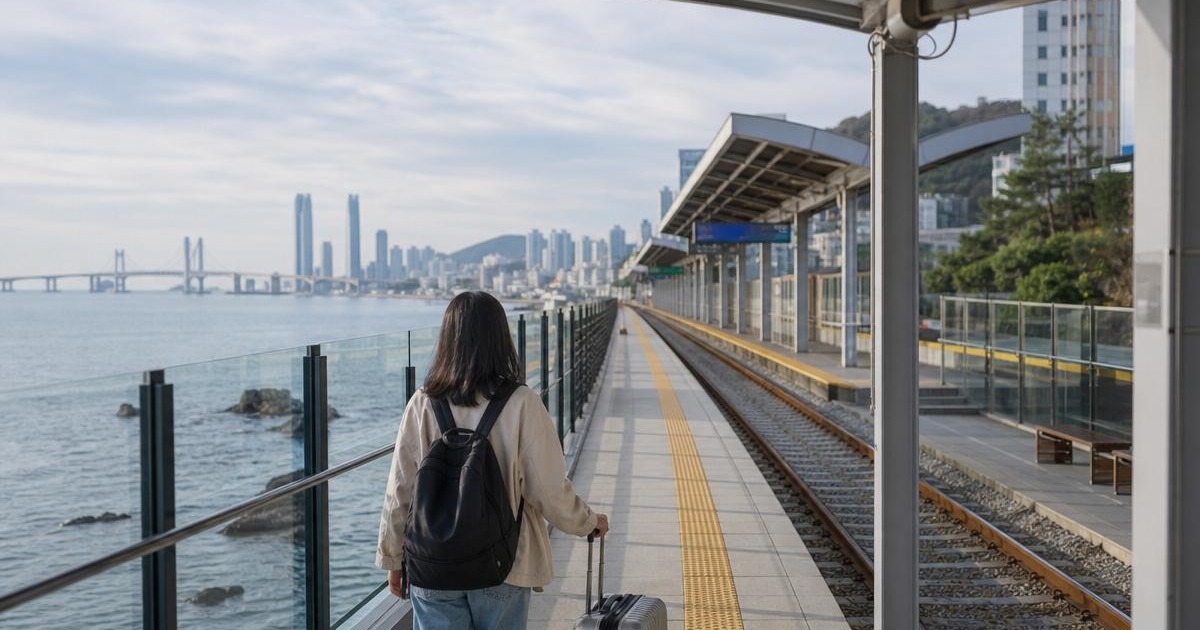
Plan Busan as two waterfront zones
Busan is easier without a car when you stop trying to cross the whole city every few hours. The city stretches along coast, hills, ports, beaches, and metro corridors. A strong weekend plan usually separates the western old-city side around Nampo-dong, Jagalchi, BIFF Square, and Gamcheon from the eastern beach side around Haeundae, Dongbaek, and Gwangalli. That keeps transit time predictable and leaves room for food, weather, and slower walking.
This route assumes you arrive by KTX, airport, or intercity bus and use metro, taxi, walking, and occasional buses. It works best for travelers who want Busan's coast and markets without renting a car or trying to visit every landmark.
Day 1: arrive, eat, and keep the west side together
If you arrive through Busan Station, start with the Nampo-dong side rather than rushing straight to Haeundae. From Busan Station, it is easier to reach Jagalchi Market, BIFF Square, Gukje Market, Yongdusan Park, and the old port neighborhoods. This gives you a real Busan feel quickly: seafood, market alleys, street snacks, harbor air, and a city center that still feels tied to the port.
Gamcheon Culture Village can fit into the same day, but do it deliberately. It is not just a quick photo stop; the village has steep lanes, viewpoints, small shops, and a history shaped by refugees and hillside living. Use the official Visit Busan information to check access and current visitor guidance. If the weather is bad, replace Gamcheon with more time around markets and a cafe or observation point.
Late morning or lunch: Busan Station to Nampo-dong or Jagalchi.
Afternoon: Gamcheon Culture Village if weather and energy are good.
Evening: BIFF Square, Gukje Market area, or a harbor-side dinner.
Day 2: Haeundae, Dongbaek, and Gwangalli
Use the second day for the eastern coast. Haeundae works well in the morning because the beach area is easier to walk before peak crowds. Dongbaekseom is a good low-pressure walk if you want sea views without committing to a long hike. From there, choose one major addition: a coastal train route, a spa or cafe stop, or a move toward Gwangalli for evening views.
Gwangalli is best treated as an evening destination. The view of Gwangan Bridge is the point, and it is more memorable when the lights are on. If you are returning to Seoul the same night, check the KTX or bus time before dinner rather than after dessert. Busan's east-west movement can feel slow late at night.
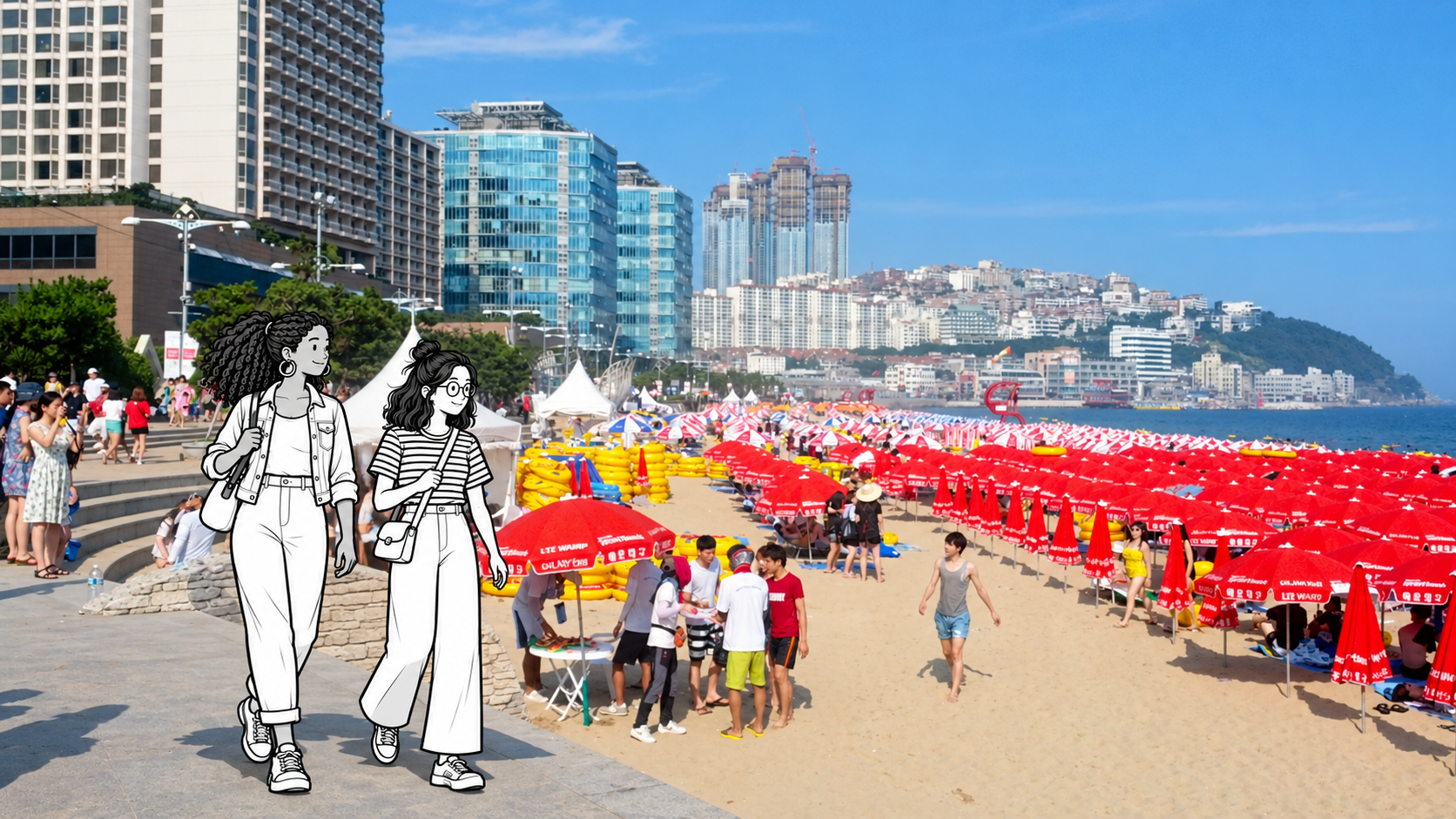
Keep the east-coast day together: enjoy the beach walk before deciding on one more nearby stop.
AI-assisted photo-based composite. Haeundae source photographed 2012; seasonal umbrellas and skyline are historical, not current service information. Background: Haeundae beach in Busan.jpg by Jon Åslund / Wikimedia Commons, CC BY 2.0. Cropped/reframed and edited with AI-generated character overlays; small background details may differ.
If the coastal ride is your main Day 2 stop, read our Busan Sky Capsule ticket guide before choosing a departure point and time.
Where to stay for a no-car weekend
Choose your hotel based on the route, not only the prettiest photo. Staying near Busan Station is efficient for a one-night trip with KTX and west-side markets. Staying in Haeundae is better for a beach-forward weekend, but it adds time when you visit Nampo or return to Busan Station. Seomyeon is a practical middle option because it connects metro lines and has food, shops, and nightlife without being locked to one coastline.
Busan Station: best for KTX arrivals, short trips, and Nampo focus.
Seomyeon: best middle ground for transit and nightlife.
Haeundae: best for beach mornings and a slower coastal stay.
Transit habits that make Busan easier
Busan's metro is useful, but not every scenic place is right beside a station. Expect short taxi rides or local buses for hillside and coastal edges. Keep your transport card topped up, save your hotel in a Korean map app, and check the exact exit before leaving a station. For Gamcheon, official tourism pages and map apps are more useful than vague blog directions because bus stops and walking approaches matter.
If you are traveling with luggage, do not drag it through hillside neighborhoods. Store it at your hotel, station, or a locker first. Busan rewards walking, but only when your hands are free.
Food and timing notes
Markets are better when you are flexible. Jagalchi and nearby food streets can be excellent, but they are not the only way to eat well in Busan. If seafood ordering feels intimidating, choose a restaurant with clear menus, posted prices, or strong local reviews. For cafes, avoid building the whole route around one viral stop; Busan views are generous, and the best plan is often the one that lets you pause when the weather is good.
What to skip on a short weekend
Skip any route that makes you cross the city three times. Skip distant attractions unless they are the reason for your trip. Skip renting a car just because Busan is large; parking, hills, unfamiliar roads, and beach-area congestion can erase the benefit. A no-car Busan weekend works when each half-day has one zone, one anchor, and one flexible backup.
More practical regional guides
Use these related Korea Travel 101 guides when you want a more specific route, attraction, or regional itinerary.


