
Quick summary: First-time Seoul visitors should group attractions by route: palace and hanok streets together, market and central Seoul together, Hongdae or Seongsu as separate neighborhood blocks, and Namsan or the Han River as flexible add-ons. Seoul has enough major sights to fill many days, but the best first trip is not a checklist. It is a set of walkable, transit-friendly clusters.
Best first route: Gyeongbokgung, Bukchon, Insadong, and a market or central dinner.
Best neighborhood contrast: Hongdae for youth/cafes or Seongsu for cafe-and-design streets.
Best evening add-on: Namsan, Myeongdong, Gwangjang, or the Han River depending on your base.
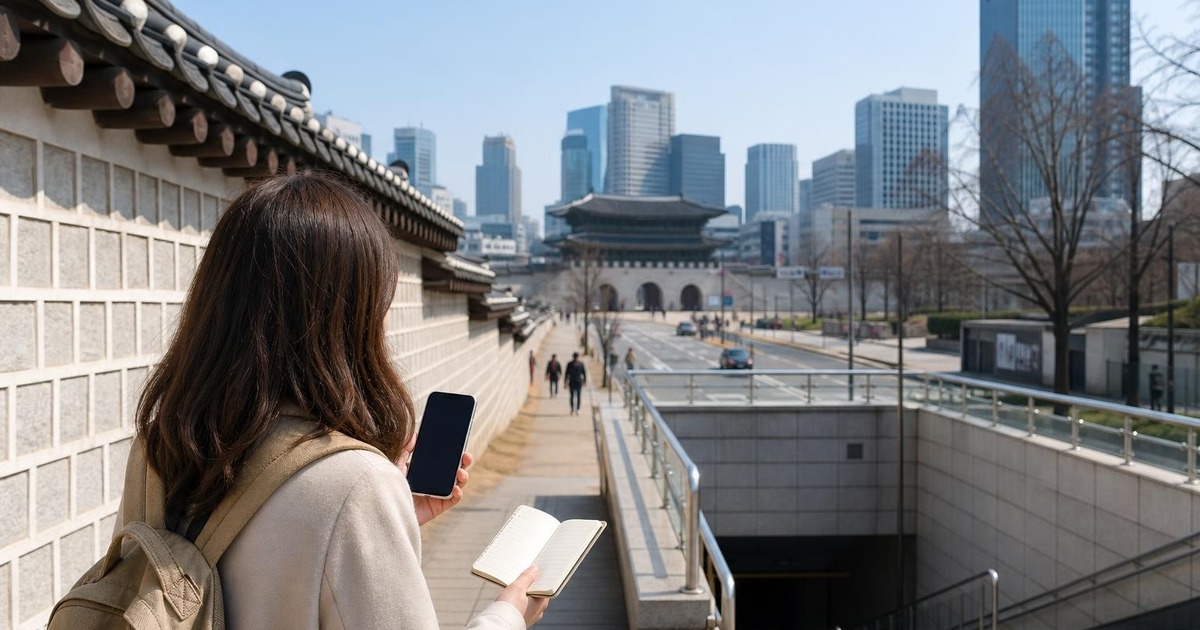
Short answer: what Seoul attractions should first-time visitors prioritize?
First-time visitors should prioritize one heritage route, one market or food route, one modern neighborhood, and one viewpoint or river moment. That usually means Gyeongbokgung or another palace, Bukchon or Insadong, Gwangjang or Namdaemun Market, Hongdae or Seongsu, and Namsan or the Han River. The exact list matters less than grouping attractions so you do not cross the city repeatedly.
If you only have three days, use the Seoul 3-day itinerary. If you are still deciding hotel area, start with the Seoul travel guide for first-time visitors and best Seoul hotel areas.
Seoul attraction clusters by route
Cluster | Good first-time stops | Best for | Planning note |
|---|---|---|---|
Palace and hanok | Gyeongbokgung, Bukchon, Insadong, Samcheong | History, photos, traditional streets | Respect Bukchon as a residential area. |
Markets and central Seoul | Gwangjang, Namdaemun, Myeongdong, Euljiro | Food, shopping, easy evenings | Carry some cash for small vendors. |
Modern neighborhoods | Hongdae, Seongsu, Gangnam, Apgujeong | Cafes, shopping, nightlife, design | Choose one per day rather than hopping all over. |
Views and river | Namsan, Seoul City Wall sections, Han River parks | Evening walks and city views | Weather and air quality matter. |
Start with the palace and hanok route
The easiest first Seoul sightseeing route is Gyeongbokgung, Bukchon, Insadong, and a nearby market or central dinner. This route gives visitors a clear historical base without requiring advanced transit confidence. It also works well because the stops are close enough to adjust if weather, crowds, or palace hours change.
Check official palace hours and closed days before committing. Bukchon is also a living neighborhood, not a theme park, so keep noise low and avoid entering private alleys or homes. Use the Gyeongbokgung, Bukchon, and Insadong route guide for a more detailed walking plan.
Add markets when you want food and texture
Markets are useful because they make Seoul feel less abstract. Gwangjang Market is popular for food, Namdaemun is useful for shopping and older market streets, and Mangwon can feel more local for travelers staying near Hongdae or western Seoul. Markets are best when you go with a flexible appetite and some cash rather than a rigid restaurant checklist.
Do not assume every stall takes foreign cards, and do not block narrow walking lanes while filming or deciding. If you have allergies or dietary restrictions, prepare translation phrases and ask carefully.
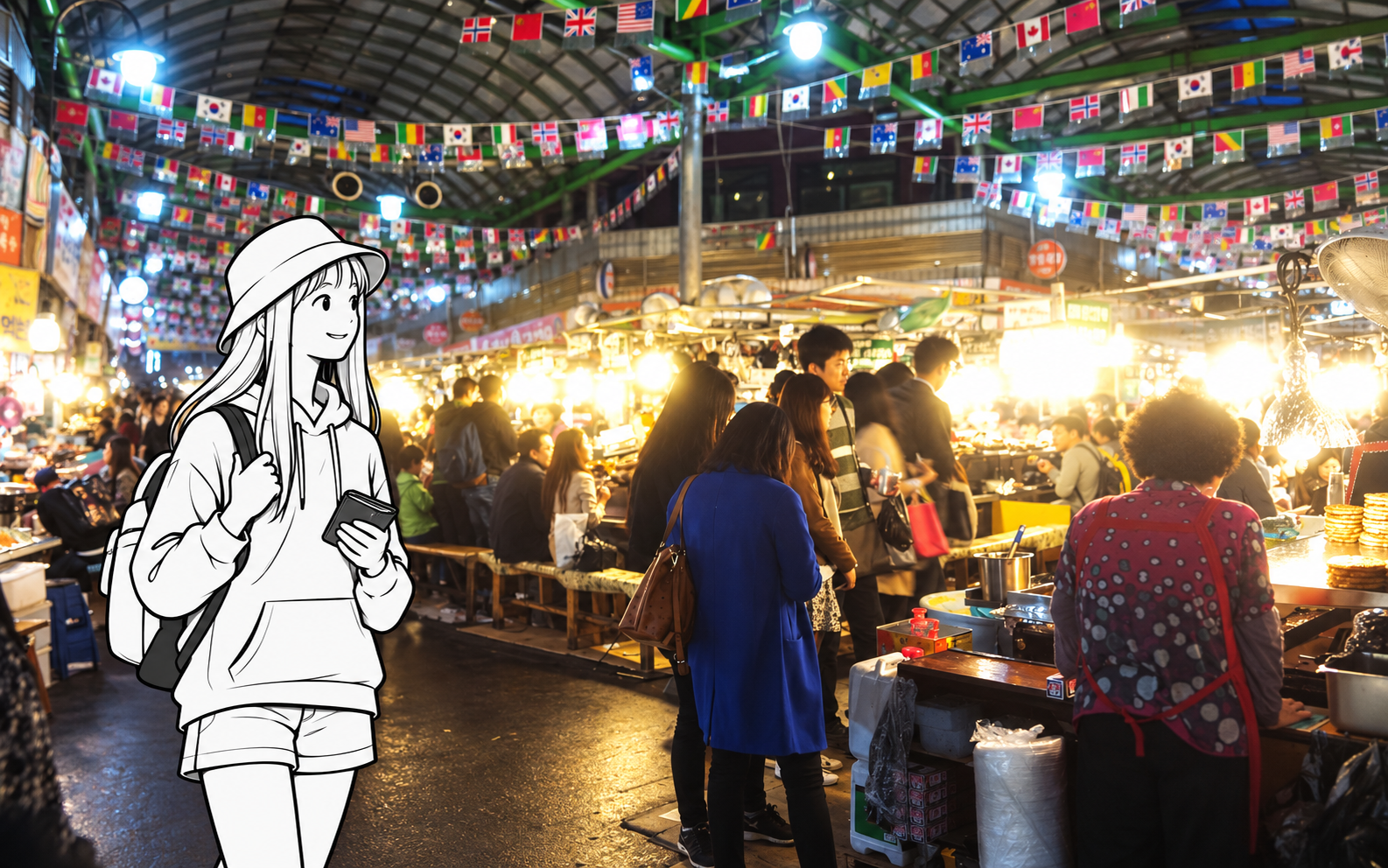
Make a market stop a flexible food break, keep some cash handy, and leave narrow aisles clear.
AI-assisted photo-based composite. Gwangjang Market source photographed 2015; scene does not endorse a particular stall or represent current prices, hygiene, opening hours, or allergy advice. Background: Gwangjangmarket inside.jpg by Jocelyndurrey / Wikimedia Commons, CC BY-SA 4.0. Cropped/reframed and edited with AI-generated character overlays; small background details may differ. Derivative illustration under CC BY-SA 4.0.
Choose one modern neighborhood per day
Hongdae, Seongsu, Gangnam, and Apgujeong all represent different versions of modern Seoul. Hongdae is casual, energetic, and strong for cafes and youth culture. Seongsu is strong for cafes, design shops, and converted industrial spaces. Gangnam and Apgujeong are better for shopping, clinics, restaurants, and southern Seoul plans.
Do not try to see all of them in one day unless your goal is just to sample subway rides. Pick the neighborhood that matches your evening. If you are staying in Hongdae, build a western Seoul evening. If you are staying in Gangnam, do not force a late-night return from the far northwest unless it is worth it.
Use viewpoints as flexible add-ons
Namsan, Seoul City Wall sections, and Han River parks are best treated as flexible add-ons because weather, air quality, and energy levels change the experience. A clear evening can make Namsan or a river walk worthwhile. A rainy or dusty day may be better for museums, cafes, shopping streets, or indoor markets.
Viewpoints also depend on hotel base. Namsan is easier from Myeongdong, Euljiro, and central Seoul. Han River parks can be easier from Yeouido, Banpo, Ttukseom, or areas connected to your subway line.
Common Seoul attraction mistakes
The first mistake is building a day from “top 10” lists without checking geography. The second is treating Bukchon like a photo studio instead of a residential district. The third is skipping meal timing; markets and popular cafes can be more crowded than expected. The fourth is not checking palace closing days, special events, or seasonal weather.
The fifth mistake is ignoring station exits. A short route can become awkward if you leave by the wrong exit or approach a destination from the wrong side. Use Naver Map setup and the Korea transportation guide before heavy sightseeing days.
FAQ
What is the best first attraction in Seoul?
Gyeongbokgung is the clearest first attraction for many visitors because it anchors Seoul’s palace history and connects well to Bukchon, Insadong, and central Seoul.
Can I visit Bukchon and Gyeongbokgung on the same day?
Yes. They are commonly paired, but check palace hours and remember that Bukchon is residential. Keep the route calm and do not turn the day into a rushed photo crawl.
Are Seoul attractions easy by subway?
Many are, but station exits and final walking routes matter. Use a Korea-ready map app and save your hotel before leaving for the day.


