
Quick summary: Buy one transit card and keep one overseas credit card. A Tmoney Travel Card from a convenience store covers subway, bus, and taxi nationwide. Your foreign Visa or Mastercard covers hotels, restaurants, and shops. Add WOWPASS only if you also want a prepaid spending card for places where overseas cards fail. Since 17 March 2026 you can buy and top up transit products with a foreign card at Seoul subway machines, so you no longer need to find cash first.
Transit, nationwide: Tmoney Travel Card, 4,000 won at convenience stores
Transit plus prepaid spending: Tmoney Travel Card+, 6,000 won, adds WOWPASS payment
Hotels, restaurants, bookings: your own Visa or Mastercard
Discontinued: KOREA TOUR CARD is no longer sold
Still not possible: tapping a foreign card directly at a subway gate
Short answer: what payment setup do you actually need?
Two things, not three. A Korean transit card for subway, bus, and taxi, and your own credit card for everything with a receipt. WOWPASS is a third option that solves a narrower problem: it gives you a Korean prepaid card that works at terminals where foreign cards get declined.
The reason you cannot skip the transit card is that Korean transit is a closed-loop system. Your Visa or Mastercard will not open a subway gate, and Seoul's own roadmap puts terminal replacement on Lines 1 to 8 in 2027, with wider rollout through 2028 to 2030. Until then, a local card is not optional.
The honest cost of this setup is a card fee you will not fully use up and a small leftover balance you probably will not bother reclaiming.
Who this guide is for
Visitors on a first trip of a few days to a few weeks who want to know what to buy, where, and in what order. If your question is how the transit system itself works, read T-money, subway, and bus basics. If you want to compare a plain card against tourist passes, read T-money card vs tourist passes. For cash, ATMs, and how much to carry, read cash, cards, and ATMs in Korea.
Your options compared
Option | Cost | Best job | Main drawback |
|---|---|---|---|
Tmoney Travel Card | 4,000 won | Nationwide subway, bus, taxi, airport and express buses | Card fee is not refundable; limited use for shopping |
Tmoney Travel Card+ | 6,000 won | Same transit use plus WOWPASS payments at card terminals nationwide | Two balances to keep track of on one card |
WOWPASS | Card fee applies | Prepaid spending where overseas cards are refused; cash withdrawal | Machine-dependent; 1,000 won fee per cash withdrawal |
Foreign credit card | Your bank's FX fees | Hotels, restaurants, shops, bookings, deposits | Cannot tap at subway gates; declined at some local terminals |
Tmoney Travel Card: the default, and what replaced KOREA TOUR CARD
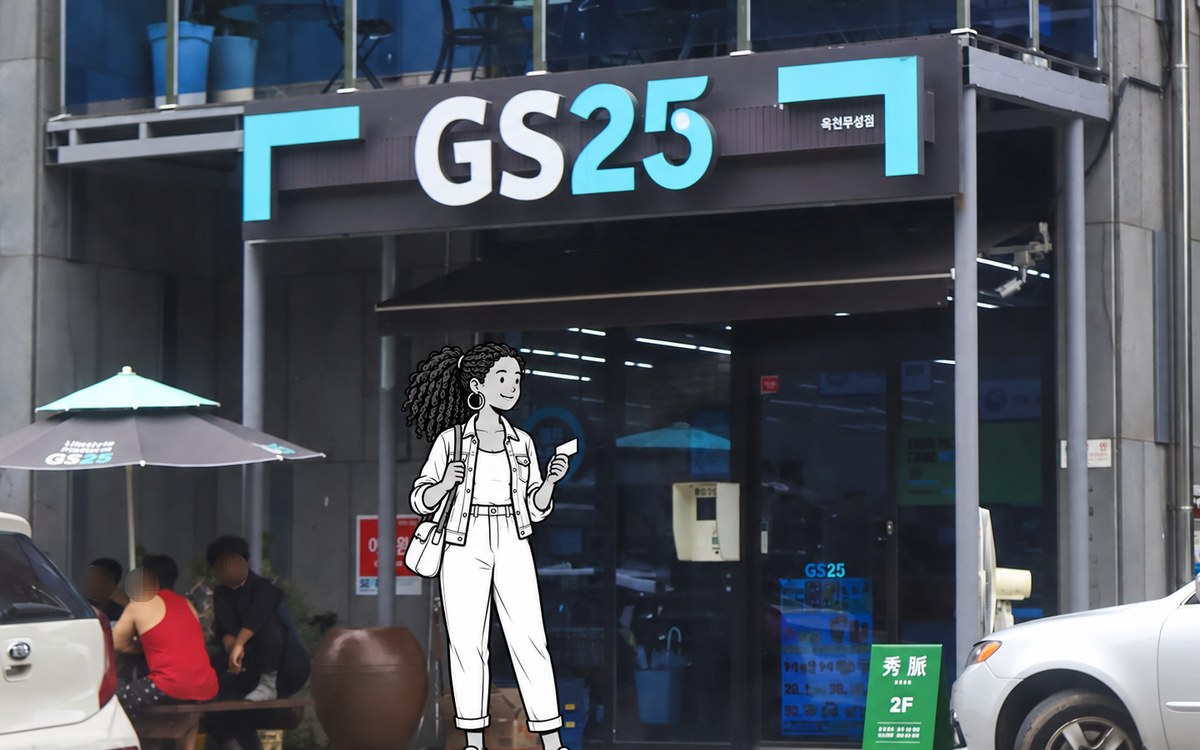
Tmoney has discontinued KOREA TOUR CARD. If a blog or guidebook still tells you to buy one, that advice is out of date. Existing holders keep the same affiliated-merchant benefits, but you cannot buy a new one.
The replacement is the Tmoney Travel Card at 4,000 won, sold at convenience stores and at the bus ticket office in Incheon Airport. It works on buses, subways, taxis, airport buses, and express buses nationwide, pays at convenience stores and cafes, and carries partner discounts for sightseeing and shopping.
There is also Tmoney Travel Card+ at 6,000 won, sold at convenience stores. It does everything the standard card does and adds WOWPASS IC payment, accepted at card terminals nationwide including shops that refuse overseas cards, with top-up and withdrawal through the WOWPASS app or a kiosk.
For most visitors the 4,000 won card is enough. Pay the extra 2,000 won only if you expect to need a Korean payment card as well.
WOWPASS: a prepaid card for when your own card is refused
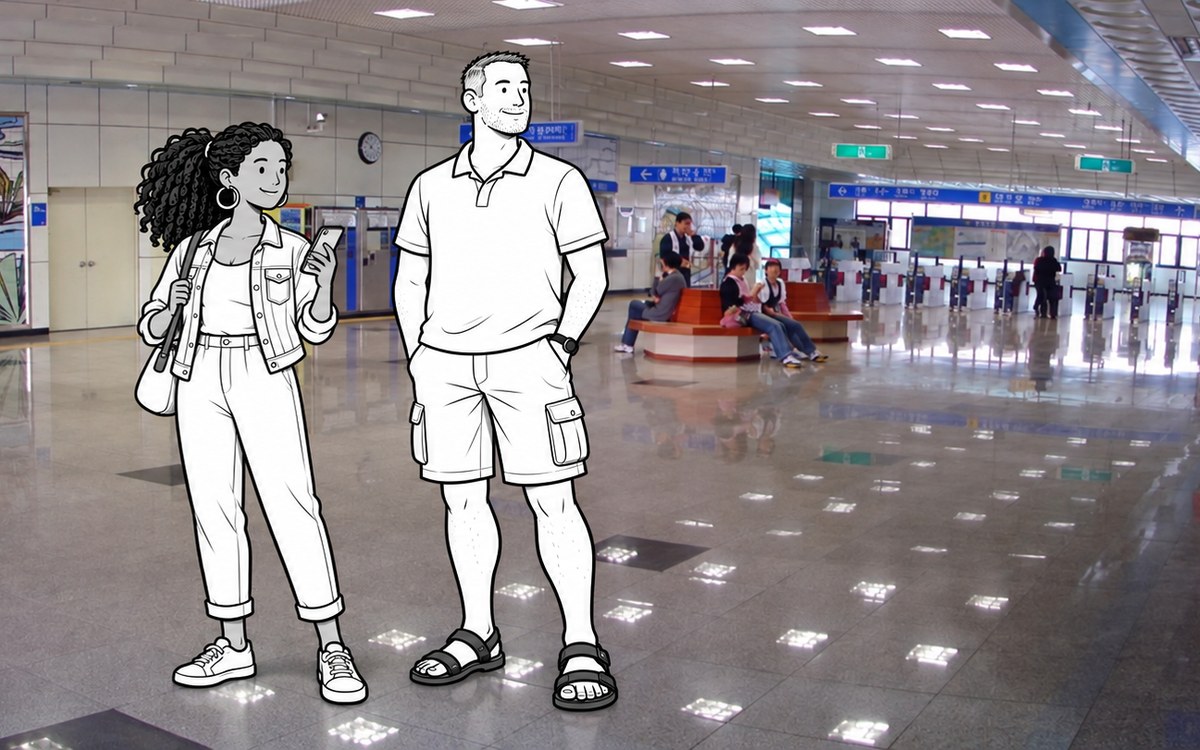
WOWPASS is a prepaid card aimed at foreign visitors. You load Korean won onto it and spend at ordinary card terminals, including places where an overseas card gets declined. It also carries a Tmoney transport function, so one card can do both.
The detail that catches people out is that the two balances are separate. Money in the spending balance does not move your transport balance, and a full WOWPASS will still leave you stuck at a subway gate if the Tmoney side is empty. Check both before you travel.
Practical limits worth knowing: you can withdraw the remaining balance as Korean won cash at a WOWPASS machine, up to 100,000 won per transaction, with a 1,000 won fee per withdrawal. Coins and amounts under 1,000 won cannot be withdrawn, and the balance stays valid for six years from the last top-up.
Your foreign credit card: what changed in March 2026
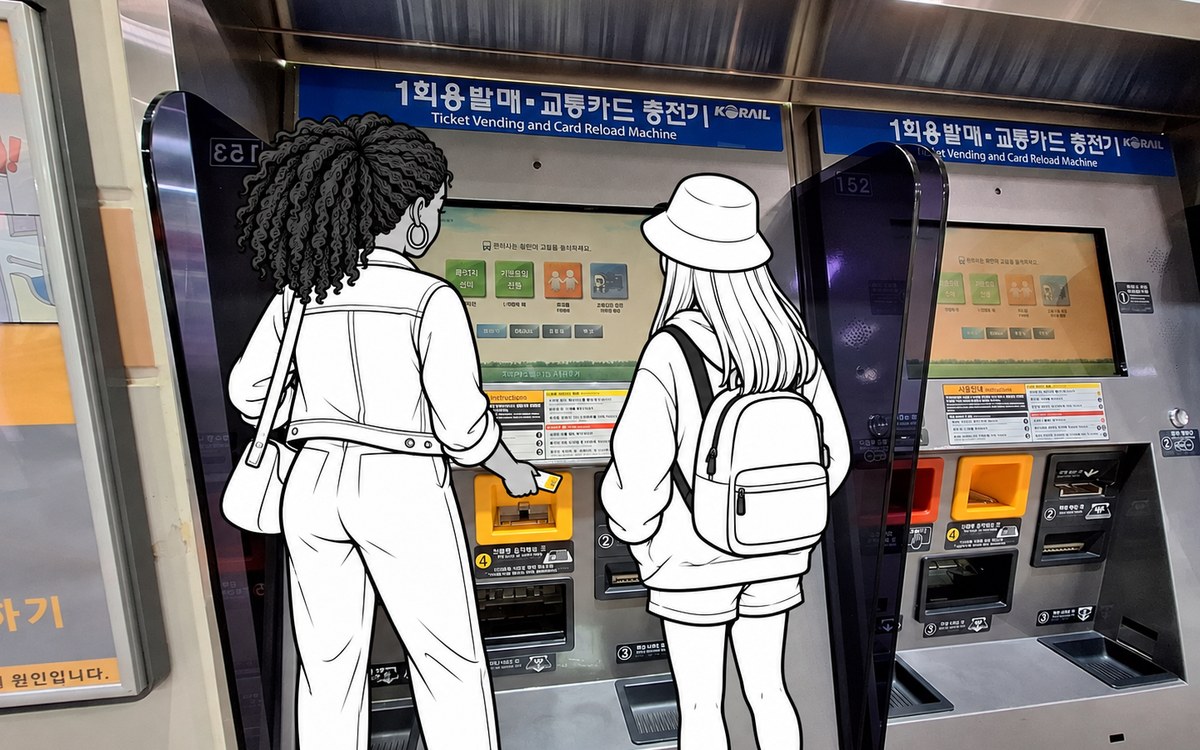
Until recently, arriving without Korean cash meant finding an ATM or exchange counter before you could buy a transit card. That changed on 17 March 2026.
Seoul installed 440 transit card vending machines across 273 stations on Lines 1 to 8 that accept internationally issued Visa and Mastercard, along with Kakao Pay and Naver Pay. You can buy or recharge Climate Card short-term passes and single-journey tickets without cash. An average service fee of about 3.7% applies to international card payments.
What has not changed is the gate itself. You still cannot tap your own Visa or Mastercard to enter the subway. Seoul's open-loop plan runs in stages: EMV modules on bus terminals through 2025 and 2026, replacement of terminals on Lines 1 to 8 in 2027, then expansion to town buses and private railways from 2028 to 2030.
So your credit card now gets you a transit card without cash, but it is not yet a transit card.
What to do in your first hour
Keep your own card accessible. It covers your airport transfer if you take a taxi, and your hotel.
Buy a Tmoney Travel Card at a convenience store or the Incheon Airport bus ticket office.
Load it. In Seoul you can now use a foreign card at station machines; elsewhere, expect to need cash.
Add WOWPASS only if you already know your cards are unreliable abroad, or choose Travel Card+ to get both in one card.
For the full arrival sequence, see where to buy a transport card, SIM, and cash at Incheon Airport.
Common mistakes
Looking for KOREA TOUR CARD. It is discontinued. Ask for a Tmoney Travel Card.
Assuming a WOWPASS top-up covers transit. The spending and transport balances are separate.
Expecting to tap a foreign card at the gate. Not before the 2027 terminal replacement, at the earliest.
Carrying no cash at all outside Seoul. The March 2026 machines are Seoul Lines 1 to 8; smaller cities and buses still lean on cash.
Over-loading a transit card at the end. Leftover balance is awkward to reclaim and small amounts cannot be withdrawn.
Which setup fits your trip?
Few days, Seoul only, reliable bank cards: Tmoney Travel Card plus your own card.
Two weeks, several cities: same, but keep more cash for regional buses and markets.
Your cards are often declined abroad: Tmoney Travel Card+ or a separate WOWPASS.
You want as few cards as possible: Tmoney Travel Card+ puts transit and spending on one card.
Arriving with no won: land, take a card-payable transfer, then buy and load at a Seoul station machine.
Related guides
Sources
- Tmoney: TMONEY TRAVEL CARD and TRAVEL CARD+ prices, stores, and the KOREA TOUR CARD discontinuation notice
- Seoul Metropolitan Government: international cards accepted at 440 transit vending machines in 273 stations from 17 March, about 3.7% service fee
- Seoul Metropolitan Government: open-loop payment rollout stages, including Lines 1 to 8 terminal replacement in 2027
- WOWPASS official site: withdrawal limit and fee, balance validity
Fares, card prices, and payment rules change. Payment details checked 18 September 2026; next review due by 17 November 2026.
Photographs: Seoul subway ticket vending and card reload machine by LandAndTree (CC BY 4.0); convenience store by LandAndTree (CC0); station concourse by Steve46814 (CC BY 3.0), all via Wikimedia Commons. Illustrated figures added by Korea Travel 101.


