
Quick summary
What to do first
Your first 72 hours in Seoul should help you recover, learn the transit rhythm, and visit a few strong areas instead of racing across the whole city.
Best next step: Use day one for arrival and orientation, day two for old Seoul, and day three for contemporary neighborhoods or a flexible weather swap.
Check before acting: Opening hours, palace closures, weather, and jet lag can change the best order.
Fact and structure review: 2026-06-05.
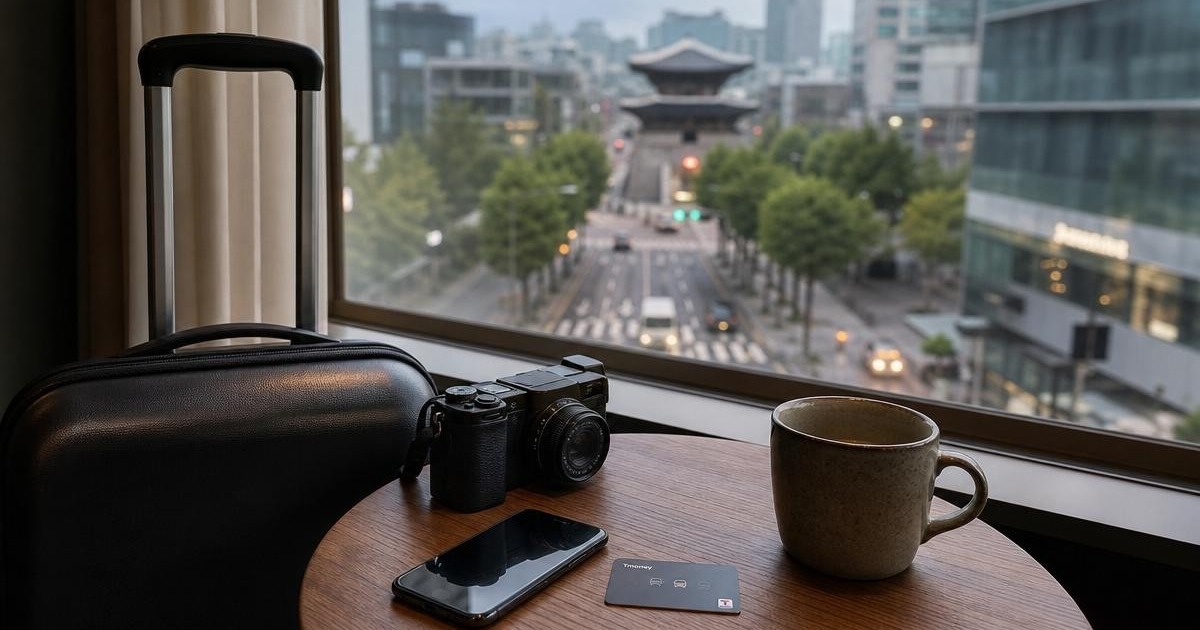
Make Seoul easy before making it ambitious
Seoul rewards curiosity, but the first 72 hours should not feel like a race across every district. A good first-time plan teaches you the city's rhythm: subway exits matter, palace hours matter, neighborhoods feel different by time of day, and food choices are better when you are not exhausted. This route balances the classic first visit with enough transit practice to make the rest of the trip easier.
Use the first day to recover and learn the basics, the second day for palaces and old Seoul, and the third day for contemporary neighborhoods. You can swap days for weather, but avoid stacking too many far-apart districts in one day.
Arrival day: solve the practical layer
After landing, your job is not to conquer Seoul. It is to reach your hotel, activate mobile data, get a transport card or confirm your payment setup, eat something simple, and learn the nearest subway station. Save your hotel in Naver Map or another Korea-friendly map app, including the Korean address. Find the nearest station exit, convenience store, and cafe. This small orientation prevents many second-day mistakes.
If you arrive late, skip major sightseeing. Walk the immediate neighborhood, buy water, check tomorrow's route, and sleep. Seoul is much more enjoyable when your first full day starts with a clear head.
Day 1: palace, hanok streets, and a market
Start with old Seoul. Gyeongbokgung is the obvious first palace because it is central, large, and strongly connected to the city's history and visual identity. If you prefer a slightly quieter palace experience, Changdeokgung can be a better fit, especially if the garden schedule works for you. After the palace, choose one nearby walking area: Bukchon, Insadong, Seochon, or Gwanghwamun. Do not try to do all of them deeply on the same morning.
For food, a market or casual restaurant is easier than a complicated reservation. Gwangjang Market, Tongin Market, or nearby neighborhood restaurants can work depending on where you walk. Keep your first full day walkable and central so subway transfers remain simple.
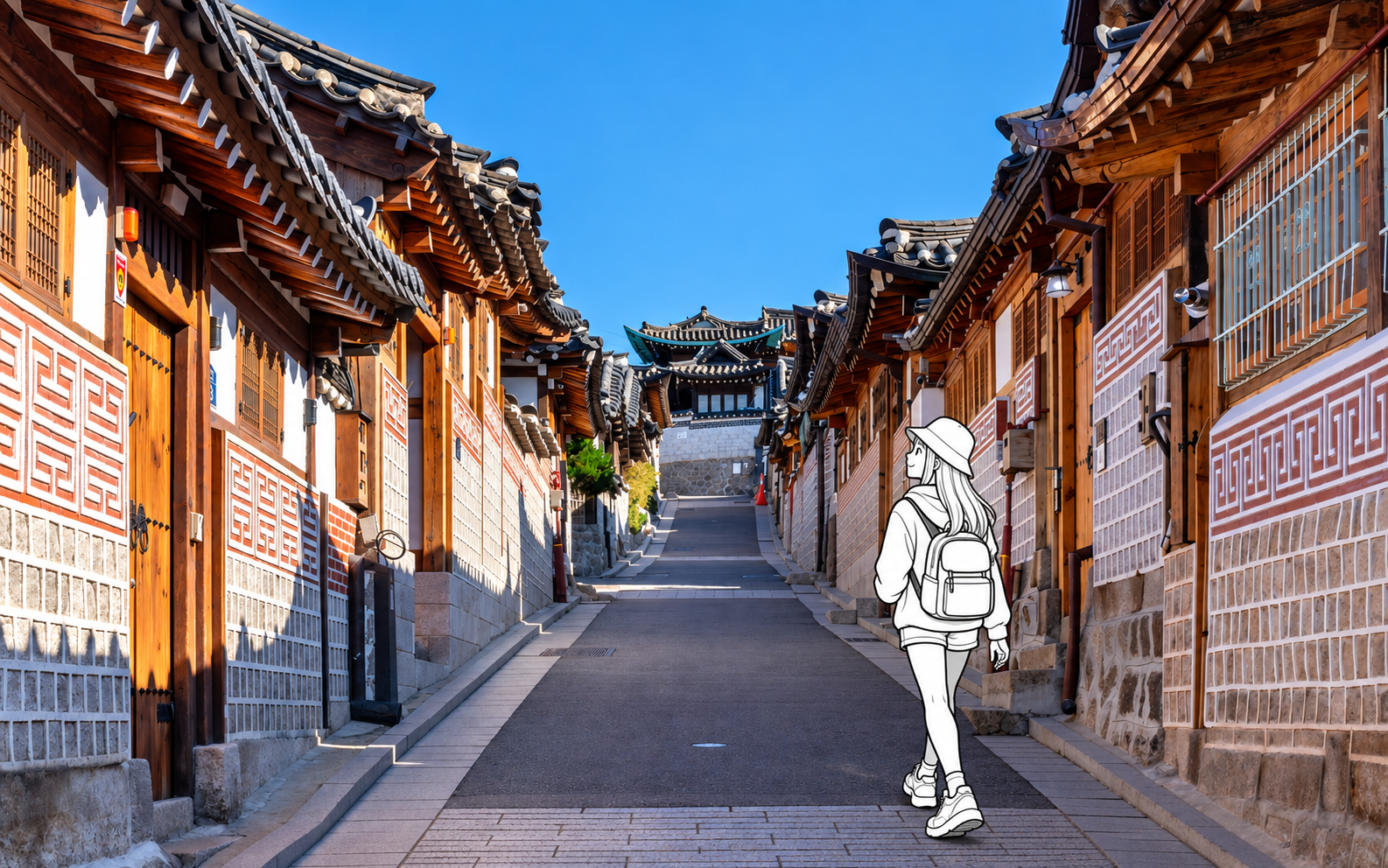
Keep your first full day focused: a palace, one nearby neighborhood, and time for a meal.
AI-assisted photo-based composite. Bukchon photo from 2024. Check current visiting hours and restrictions; this illustration does not show an unrestricted-access route. Background: Bukchon-ro 11-gil street with hanok houses and blue sky in Bukchon Hanok Village Seoul.jpg by Basile Morin / Wikimedia Commons, CC BY-SA 4.0. Cropped/reframed and edited with AI-generated character overlays; small background details may differ. Derivative illustration under CC BY-SA 4.0.
Day 2: learn modern Seoul through one or two neighborhoods
Pick a modern neighborhood based on your travel style. Hongdae is good for youth culture, shops, music, and a late-day energy. Seongsu is useful for cafes, design shops, and a slower urban feel. Gangnam works if your interests include shopping, clinics, offices, or nightlife, but it is not automatically the best first-time district. Itaewon and Hannam can be good for international dining and hillside walking.
The key is to pair neighborhoods that make geographic sense. Hongdae plus Yeonnam is natural. Seongsu plus Seoul Forest is natural. Gangnam plus COEX is natural. Hongdae plus Gangnam plus Myeongdong in one afternoon is usually just subway fatigue.
Day 3: add a view and a confidence route
By the third day, add one viewpoint or longer route. Namsan/N Seoul Tower, a Han River walk, Seoul City Wall sections, or a mountain-edge viewpoint can all work. Choose based on weather and energy. Then use the rest of the day to practice a route you will need later: airport return, KTX station, concert venue, clinic, shopping district, or a day-trip departure point.
This is also a good day to adjust your transport setup. If you are constantly topping up your card, add more balance. If you are struggling with map search, save Korean names. If your shoes are failing, fix that before a bigger walking day.
Food pacing for first-timers
Seoul has excellent food, but first-time visitors often overplan famous restaurants and underplan hunger. Keep breakfast simple, reserve only one meal if you care deeply about it, and leave room for convenience stores, bakeries, street snacks, and neighborhood restaurants. If a restaurant has a long line and you are tired, choose a backup. A good Seoul trip does not depend on a single viral meal.
Transit habits that matter immediately
Check subway exit numbers before leaving the train area.
Tap in and out carefully on buses and subways.
Use station names plus line colors, not only neighborhood names.
Save your hotel and major stops in a Korea-friendly map app.
Expect stairs in older stations and plan luggage routes separately.
What to avoid in the first 72 hours
Avoid changing hotels too early, booking distant morning activities after a late arrival, and treating Seoul as one small downtown. The city is dense but wide. A focused 72-hour plan gives you palaces, markets, cafes, neighborhoods, transit confidence, and recovery time. That is enough to make the rest of Korea feel easier.
Plan the Seoul cluster around this route
Use this 72-hour orientation as the light version, then move to the hotel-area and 3-day itinerary guides when you are ready to book or schedule.
Use the planning hub for the bigger decision
This page answers a specific travel problem. Use the related hub guide when you need the broader arrival, transport, Seoul, money, or app-planning context.
More practical regional guides
Use these related Korea Travel 101 guides when you want a more specific route, attraction, or regional itinerary.


