
If you have just landed at Incheon Airport, you do not need to solve every Korea travel purchase before leaving the terminal. You need three things in the right order: working mobile data, the correct product for your first ride, and a small cash backup.
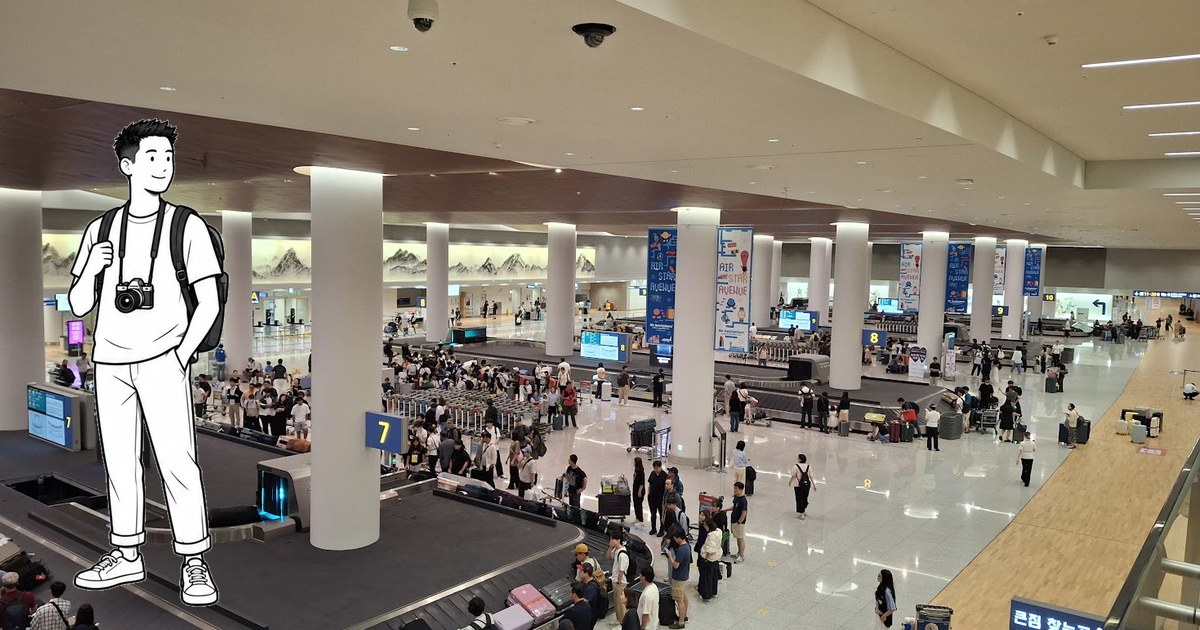
The best order for your first 10 minutes
Arrival halls are full of telecom counters, exchange desks, ticket machines, and convenience stores. The easiest way to avoid duplicate purchases is to make one decision at a time.
| Step | What to decide | What you may need to buy |
|---|---|---|
| 1. Get online | Does your installed eSIM or roaming plan work? | Nothing, an eSIM, a physical SIM, or pocket Wi-Fi |
| 2. Choose the first ride | AREX All-Stop, AREX Express, airport bus, or taxi? | The product for that route |
| 3. Add a cash buffer | Do you have Korean won for a standard transport-card reload? | A small withdrawal or exchange |
| 4. Test the plan | Can you open the route and your hotel address? | Nothing else if both are accessible |
1. Make your phone work before shopping
If you installed an eSIM before departure, switch it on after landing, select it for mobile data, and confirm that data roaming is set as instructed by the provider. Open a map and load your hotel's address to verify that the connection works. Airport Wi-Fi is useful while troubleshooting, but it does not replace a connection for the trip into Seoul.
If you need a physical SIM, a local phone number, or in-person help, both terminals have official carrier roaming counters in the public arrivals area. The airport's current directory lists 24-hour carrier options as well as daytime counters, but exact locations and hours can change. Check the live directory when you land, especially after a late-night arrival.
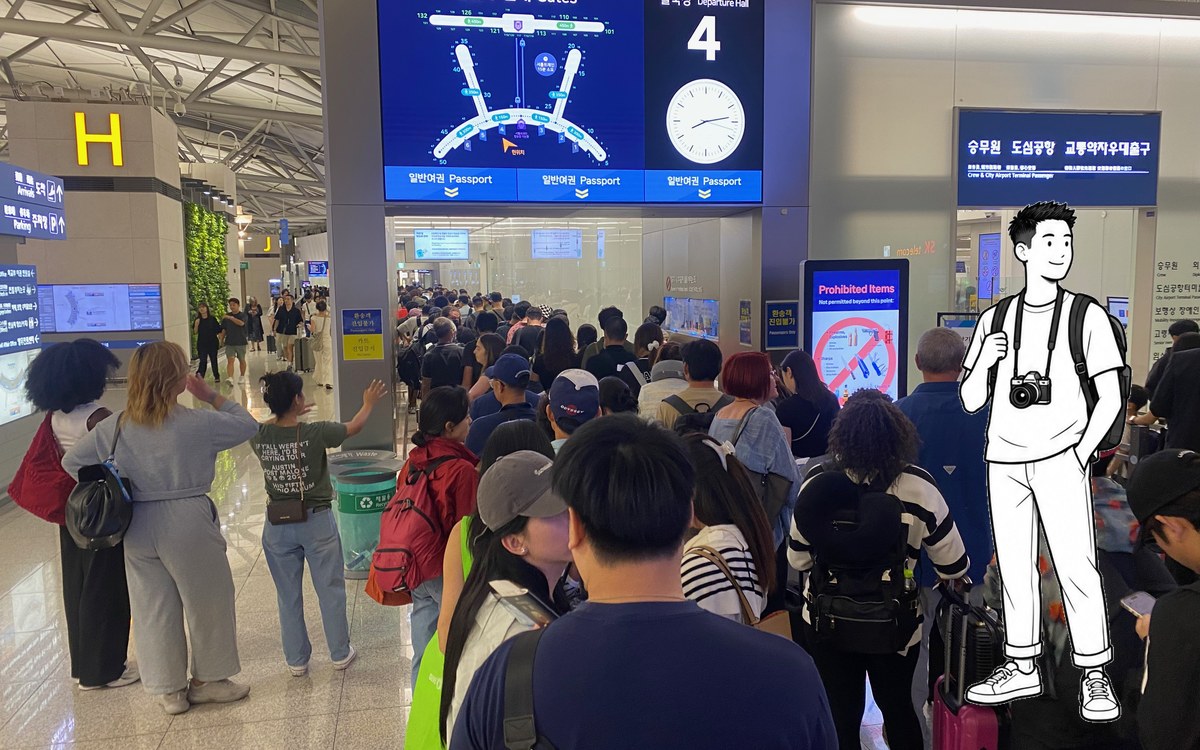
Bring your passport if you plan to buy a visitor SIM or an eSIM with voice and SMS. Carrier rules vary, but products with a Korean phone number may require identity verification at an airport counter. If you only need data, an online eSIM can be faster. Pocket Wi-Fi works best for a group that will stay together; it is less convenient when people split up because the router has to stay charged and nearby.
For device compatibility, activation steps, and the trade-offs between SIM, eSIM, roaming, and pocket Wi-Fi, read the Korea SIM, eSIM, and roaming guide.
2. Choose the route before buying a transport card
A transport card is useful in Korea, but it is not the right first purchase for every airport transfer. Look up the route to your actual hotel, then match the purchase to that route.
| Your first ride | Buy at the airport | Do you need a transport card now? |
|---|---|---|
| AREX All-Stop Train, then subway or bus | A standard transport card with enough stored value | Yes, it is the simplest option for the rail gate and transfer |
| AREX Express | A separate AREX Express ticket | No, not for the airport-to-Seoul Express leg |
| Airport limousine bus | A ticket for the selected route | No, not for the first ride |
| Taxi or app-arranged car | No rail or bus ticket | No; buy one later near your hotel |
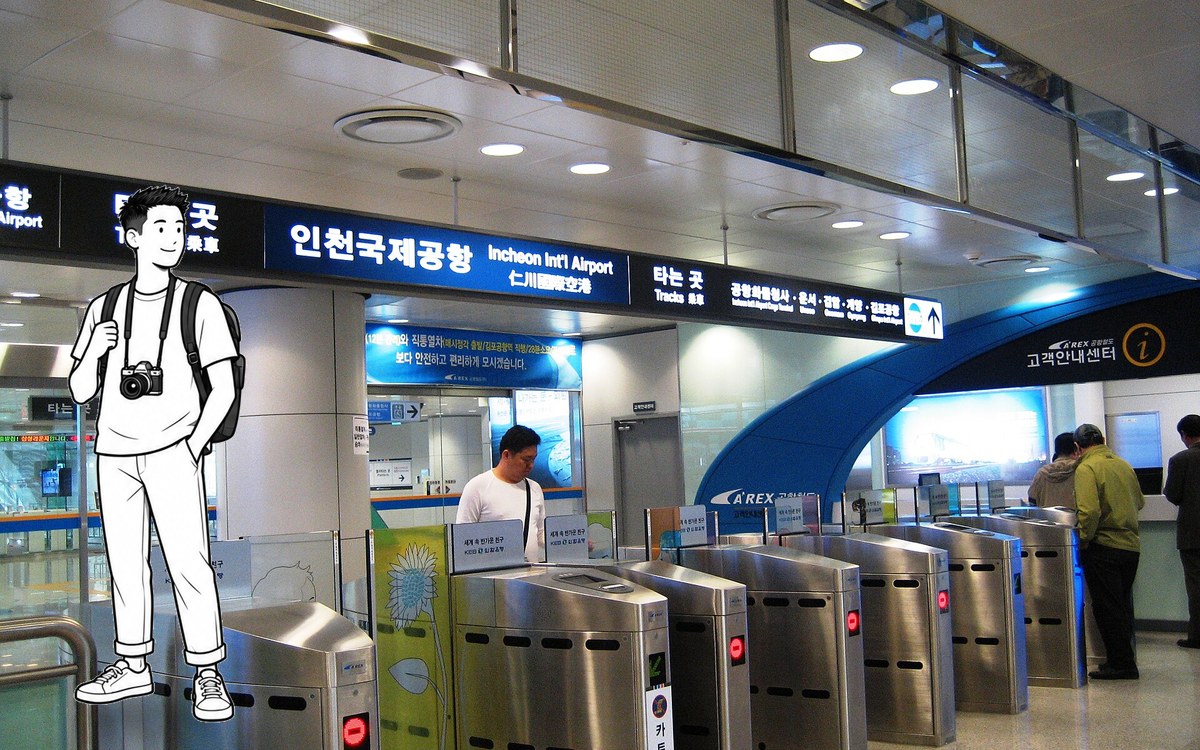
The AREX stations are in the Basement 1 Transportation Centers at both terminals. For an airport bus, Terminal 1 has ticket and information booths on the Level 1 arrivals side, while Terminal 2 handles bus ticketing in its Basement 1 Transportation Center. Follow the official signs for Airport Railroad or Bus Ticket rather than buying from an unrelated kiosk.
If you have not chosen between train, bus, and taxi, use the Incheon Airport to Seoul transport comparison. It covers the route decision; this article covers only what to buy once you have made it.
3. Buy a standard transport card only when it helps
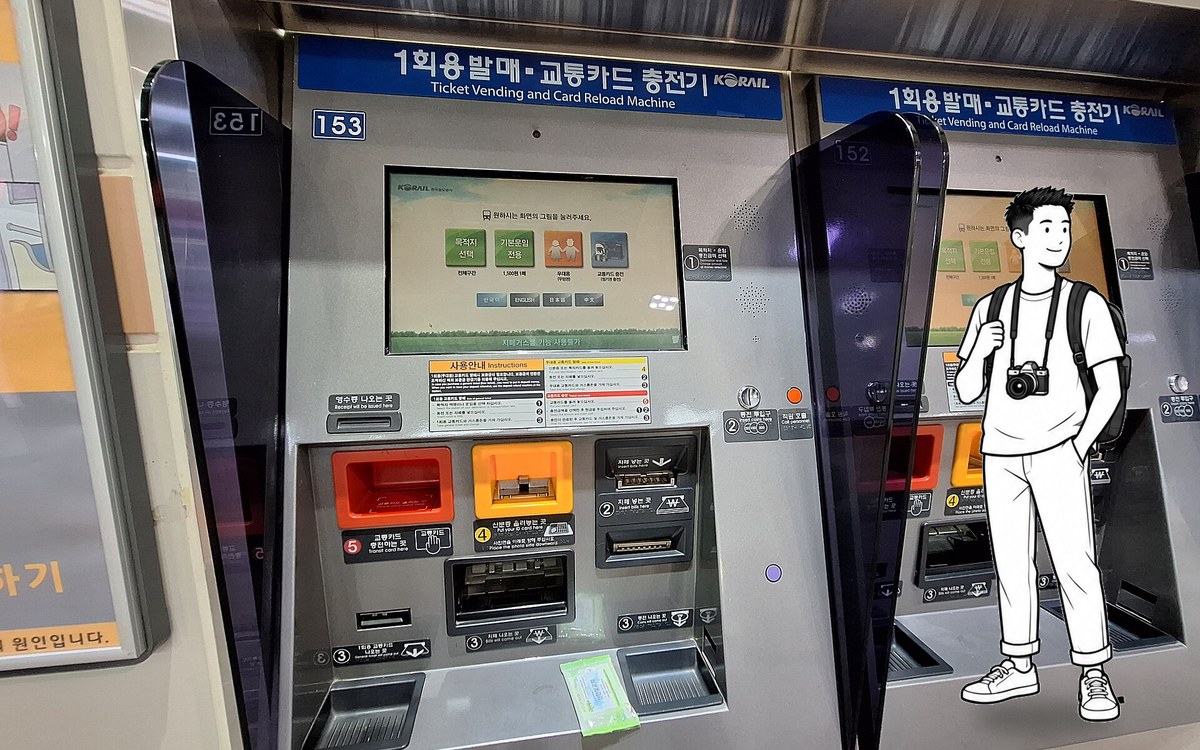
If your route uses the AREX All-Stop Train or another local transit service, ask a participating convenience store for a standard transportation card. Tmoney is the most familiar example. Card designs and stock vary, and the price of the physical card is separate from the money loaded onto it.
For a standard physical Tmoney card, the official top-up instructions specify Korean-won cash. Load enough for the first trip and a little extra; there is no advantage to putting a large balance on the card before you understand your itinerary. You can add more later at participating convenience stores or subway top-up machines.
Some telecom companies sell named visitor bundles that combine mobile data with transport benefits. Treat these as separate products with their own coverage and rules. Do not assume that an ordinary SIM or eSIM automatically includes a transport card, an AREX Express ticket, or enough transit value for your route.
For subway and bus use, transfers, and where the card works, see the Tmoney basics guide. For the practical cash-reload rules and exceptions, see why cash still matters for a standard physical Tmoney card.
4. Get a small amount of cash, not your whole trip budget
Incheon Airport has authorized bank exchange counters and ATMs in the public areas of both terminals. Use an official bank or airport-listed facility. ATM access, withdrawal fees, and the exchange rate depend on your bank and card, so check the amount shown before accepting the transaction.
The useful goal is a first-day cash buffer: enough for a standard transport-card top-up, a small purchase, or a payment backup. Korea is generally card-friendly, so most visitors do not need to exchange their entire travel budget at the airport. At the same time, arriving with no Korean won at all can make a standard Tmoney reload needlessly awkward.
For card acceptance, ATM strategy, dynamic currency conversion, and a broader cash plan, use the cash, cards, and ATMs guide for Korea.
Where to go in each terminal
| Need | Terminal 1 | Terminal 2 |
|---|---|---|
| SIM or in-person setup | Carrier roaming counters on Level 1 in the public arrival halls, including areas around Halls A and F | Carrier roaming counters on Level 1 in the public arrivals area, including areas near Exits 4 and 7 |
| AREX ticket or station | Basement 1 Transportation Center | Basement 1 Transportation Center |
| Airport-bus ticket | Ticket and information booths on the Level 1 arrivals side | Basement 1 Transportation Center |
| Cash or transport card | Airport-listed banks, ATMs, and participating public-area convenience stores | Airport-listed banks, ATMs, and participating public-area convenience stores |
These locations were checked on September 21, 2026. Airport tenants, counter numbers, and opening hours can move, so use the official Incheon Airport facility directory for the live location before crossing the terminal for a specific counter.
If you arrive late at night
The airport currently lists some 24-hour telecom counters, ATMs, and convenience stores. That does not mean every product, bank service, train, or bus route operates all night. Check the transport schedule first. If the next practical ride is a taxi, get your phone working, save the hotel address in Korean, and postpone the transport-card purchase until the next day.
Purchases you can usually skip at the airport
- A large transport-card balance: start small and reload after you know your daily route.
- Several overlapping data products: test the plan you already have before buying another one.
- Your entire trip's cash: a modest arrival reserve is enough for most travelers.
- A shopping-focused prepaid card you did not plan to use: do not confuse it with the transit product required for your route.
- Every tourist pass on display: buy a pass only after checking its covered services against your itinerary.
Three common arrival plans
Solo traveler taking the AREX All-Stop Train
Activate mobile data, confirm the station transfer, get a small amount of won, buy and load a standard transport card, then enter the rail gate.
Couple taking the AREX Express
Test one or both phones, buy separate Express tickets, and wait to buy transport cards until you need the subway or bus in Seoul.
Family taking a taxi to the hotel
Make sure one phone has reliable data, save the hotel's Korean address and phone number, and go to the official taxi area. SIMs for other family members and transport cards can wait until everyone has rested.
Before you leave the terminal
- Your phone can load a live map away from airport Wi-Fi.
- You have the hotel name and address in Korean.
- You know which train, bus, or taxi pickup you are using.
- You bought the correct first-leg ticket or card.
- You have a small Korean-won backup if your plan needs it.
Once those five items are settled, leave the terminal. You can compare longer-term passes, shopping cards, and larger cash withdrawals after checking in. For the complete sequence from immigration to your first hotel, continue with the first-time Korea arrival guide.


