
Quick summary
What to do first
Jeju is easier when each day has one regional anchor and enough weather buffer. Public buses can work for simple routes, but taxis, tours, or a rental car make dispersed nature stops easier.
Best next step: Choose your base first, then build the itinerary around east, west, south, or a full-island route.
Check before acting: Weather, wind, bus intervals, and driving comfort affect Jeju more than most map-based itineraries suggest.
Fact and structure review: 2026-06-05.
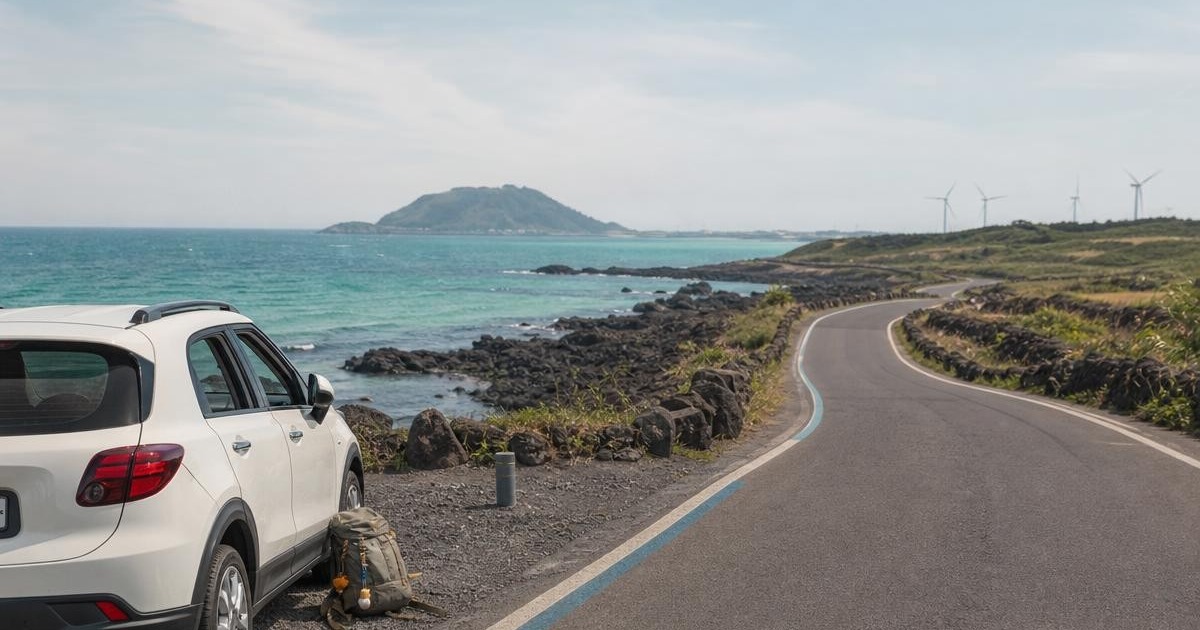
Choose a base before choosing attractions
Jeju is where many Korea itineraries become too ambitious. The island looks compact on a map, but wind, rain, coastal roads, bus intervals, rental-car pickup, and long scenic stops make time behave differently. A better Jeju plan starts with a base and a pace. Decide whether this trip is east coast, west coast, south coast, or a full island drive, then build around two or three anchors instead of eight separate stops.
This guide is for travelers who want Jeju to feel open rather than rushed. It does not assume you must drive, but it is honest about the trade-off: public buses can work for simple routes, while taxis, tours, or a rental car make dispersed nature stops easier.
Two-night Jeju: keep it east or west
With two nights, do not try to cover the whole island. Pick the east if Seongsan Ilchulbong, Udo, Seopjikoji, coastal sunrise, and quieter village roads appeal to you. Pick the west or southwest if beaches, cafes, Sanbangsan-area scenery, and slower coastal driving are the priority. Jeju City is practical for airport access, but it can feel less like the Jeju people imagine if all your daytime anchors are far away.
East base: better for Seongsan, Udo, sunrise, and volcanic coast scenery.
Jeju City base: better for short trips, airport convenience, and no-car stays.
South or west base: better for slower cafes, beaches, and scenic drives.
Three-night Jeju: one move is enough
For three nights, one base change can work. Spend the first part near Jeju City or the east, then move south or west. More than one move usually creates packing fatigue and wastes the exact hours you came to Jeju to enjoy. If you rent a car, reserve enough time for pickup and return. If you do not drive, plan around bus routes, taxi availability, and whether your accommodation is near a main road.
A simple three-night route could be: arrival and Jeju City setup, east coast with Seongsan Ilchulbong, optional Udo or Seopjikoji, then a south or west coast day with a flexible weather backup. Keep one evening unscheduled. Jeju sunsets, wind, rain, and seafood dinners do not always fit a spreadsheet.
Weather is not a side note
Jeju weather can change the value of a route. A viewpoint that is perfect on a clear morning may be forgettable in fog. A windy ferry day can make Udo less appealing. Heavy rain can turn coastal walks into a cafe-and-museum day. Build your itinerary with swappable blocks: one outdoor anchor, one indoor backup, and one meal or cafe stop in the same area.
Clear morning: sunrise peaks, coastal roads, viewpoints.
Windy day: avoid plans that depend on ferries or exposed ridges.
Rainy day: choose museums, markets, cafes, short walks, or hotel recovery.
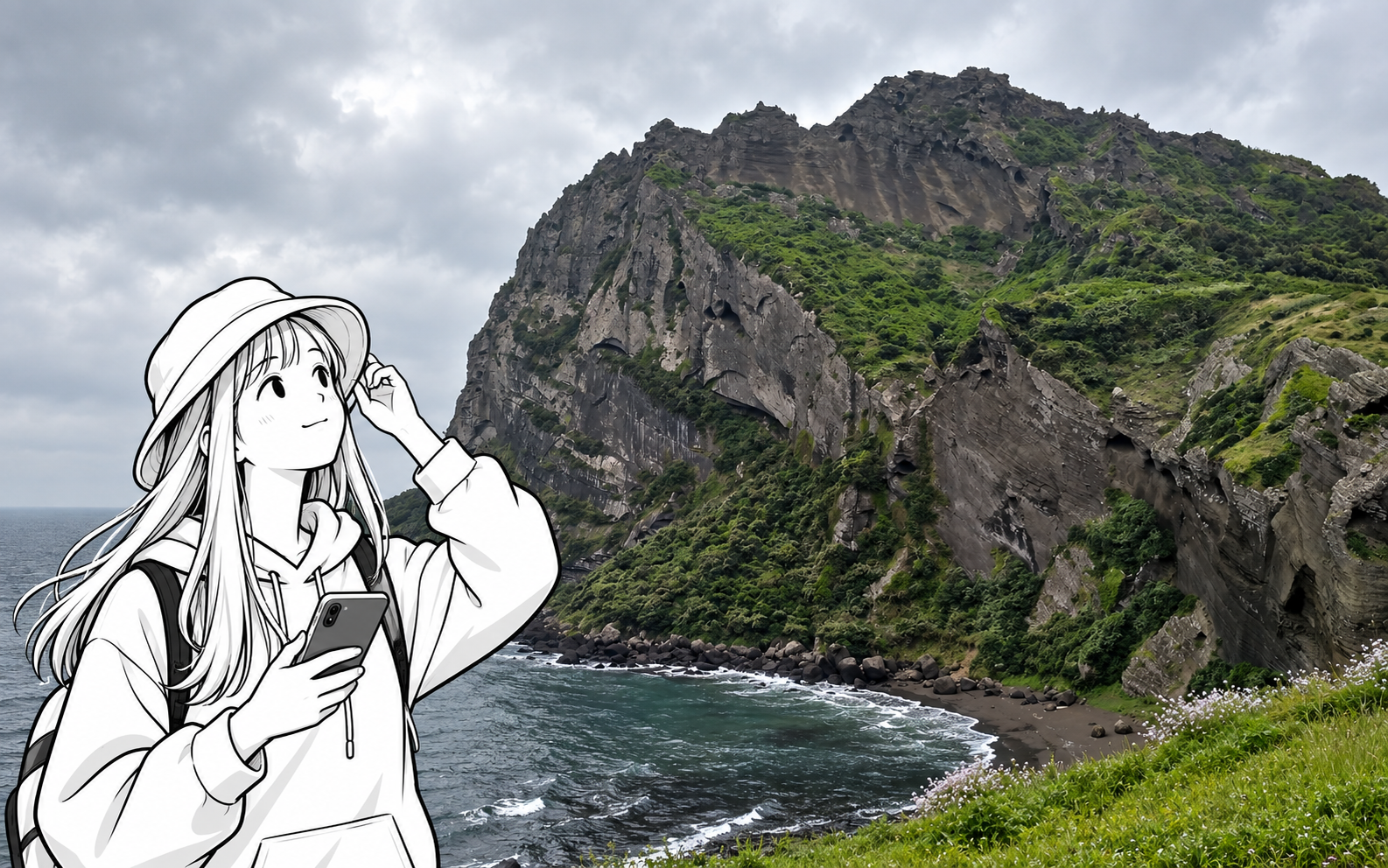
Keep an outdoor anchor and a nearby weather backup, and leave room to change the day's plan.
AI-assisted photo-based composite. Coastal source photographed 2017. Editorial overlay does not identify a trail, safe standing point, or current weather forecast. Background: Seongsan Ilchulbong cliff facing the sea.jpg by A. D. Prakasa / Wikimedia Commons, CC BY-SA 4.0. Cropped/reframed and edited with AI-generated character overlays; small background details may differ. Derivative illustration under CC BY-SA 4.0.
Transport choices without pretending they are equal
A rental car gives the most freedom, but it is not always the right answer. Travelers who are uncomfortable driving abroad, who do not want to navigate parking, or who plan to drink should not force it. Buses can cover major routes but may require patience and careful timing. Taxis are useful for short gaps, and guided day tours can be efficient if you want to see multiple nature sites without solving logistics.
If you do not drive, stay closer to your anchors. A no-car east Jeju trip is easier from a base near major bus routes than from a remote pension chosen only for its view. Save Korean place names in your map app and keep your accommodation phone number available for taxi help.
How to use Seongsan Ilchulbong well
Seongsan Ilchulbong is one of Jeju's strongest anchors because it gives the trip structure: sunrise, a short climb, coastal views, nearby food, and possible links to Udo or Seopjikoji. Do not stack it with too many distant stops on the same day. If sunrise matters, sleep nearby or accept a very early transfer. If you are not a sunrise person, go later and build the day around the east coast rather than forcing a 4 a.m. alarm.
What to book and what to leave open
Book flights, accommodation, rental car if needed, and any high-demand tour. Leave cafes, minor viewpoints, and photo stops flexible. Jeju is better when you can pull over for weather, food, or a view without breaking the day. The goal is not to see fewer things; it is to avoid turning the island into a transit checklist.
A slower Jeju checklist
Pick one main region before adding attractions.
Plan one outdoor anchor and one weather backup per day.
Do not change accommodation every night.
Confirm transport for the first and last airport legs.
Save Korean names, addresses, and phone numbers for key stops.
Leave one evening unplanned for weather, food, or rest.
More practical regional guides
Use these related Korea Travel 101 guides when you want a more specific route, attraction, or regional itinerary.


