
Quick summary: Korea transportation is easiest when you separate four systems: airport transfer, city transit, taxis or ride-hailing, and intercity travel. For most first-time visitors, the basic setup is a working map app, some Korean won, a transport card for subway and buses, and a fallback taxi plan. Do not choose every route by speed alone; luggage, station exits, payment, and transfer complexity often matter more.
Best daily system: subway plus buses in Seoul, supported by Naver Map or another Korea-ready route app.
Best payment habit: keep a physical transport card and some cash for top-ups unless your exact pass/card setup is already tested.
Best backup: one taxi or ride-hailing workflow for late nights, rain, heavy luggage, or awkward hotel locations.
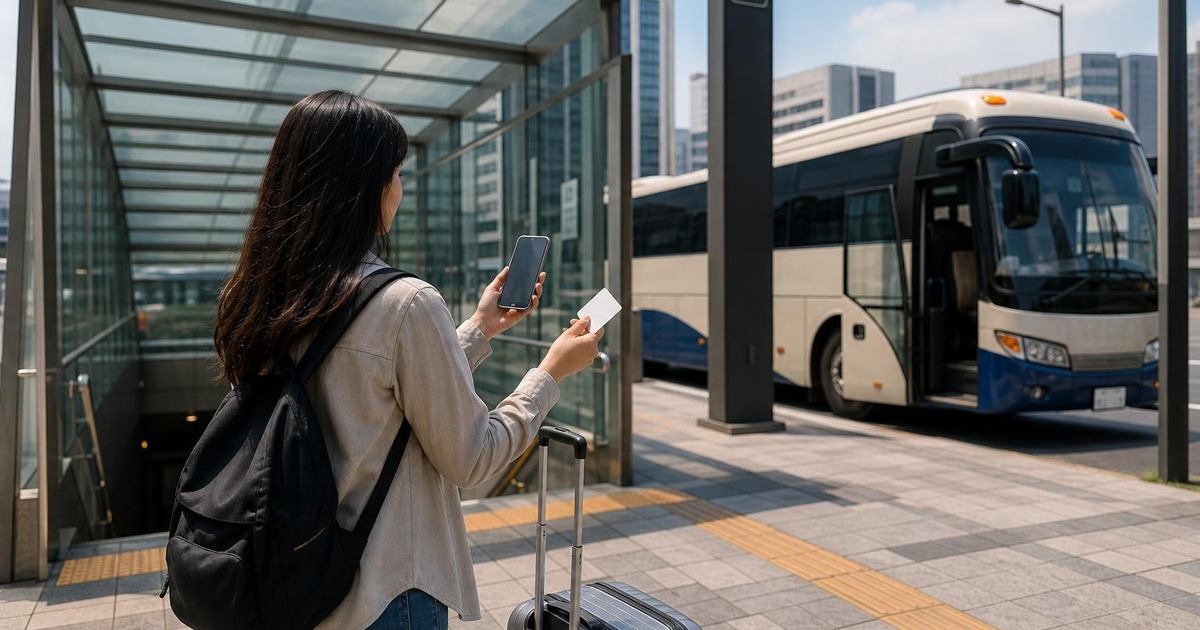
Short answer: how do visitors get around Korea?
Visitors usually get around Korea by combining airport rail or airport buses, local subway and buses, taxis or ride-hailing apps, and intercity trains or express buses. Seoul is the easiest city for public transportation, but the details still matter: transport cards, station exits, bus boarding rules, transfers, and local map apps can all affect the trip.
The most reliable first-trip approach is to use public transit for predictable city movement and taxis for situations where convenience matters more than cost. Use AREX, airport limousine buses, or taxis for the airport depending on your hotel area. Use subway and buses for most Seoul sightseeing. Use KTX or other trains for Busan, Daegu, Gyeongju via nearby stations, Jeonju, and other intercity plans when the route fits.
Transportation options at a glance
Transport type | Best for | Main friction | Start here |
|---|---|---|---|
AREX airport rail | Seoul Station, Hongdae, rail transfers | Final subway transfer or station walk with luggage | |
Airport limousine bus | Hotels near a direct stop, luggage-heavy arrivals | Traffic and bus stop distance from hotel | |
Subway | Daily Seoul routes, predictable travel time | Station exits, stairs, transfers, rush hour | |
City buses | Short local routes, neighborhoods away from subway | Route confidence, tap-in/tap-out habit, language | |
Taxi or ride-hailing | Late nights, rain, groups, heavy luggage | Pickup points, app setup, payment method | |
KTX and trains | Busan, Daegu, Daejeon, Gyeongju via nearby stations | Booking, station choice, luggage, sold-out trains |
This table is a planning tool, not a rigid ranking. A solo traveler near Hongdae may love AREX. A family staying near an airport bus stop in Myeongdong may find the bus easier. A traveler with a late landing may prefer a taxi even if it costs more. Korea transportation works best when the route fits your body, bags, time, and hotel.
Use a transport card for subway and buses
A transport card is the normal way visitors pay for subway and bus rides in Seoul and many other parts of Korea. Tmoney is the most familiar option for many tourists, but EZL, WOWPASS with transit function, and some tourist cards may also appear in planning. The important point is that subway and bus travel is much smoother when you can tap instead of buying single tickets repeatedly.
For first-time visitors, a simple physical card is often easier than chasing the most complicated pass. Buy or top up with a modest amount, keep some cash for situations where cash top-up is required, and check your balance before long transit days. If you are comparing tourist passes or all-in-one payment cards, make sure you separate the transit balance from shopping/payment functions.
Read Tmoney, subway, and bus basics, why cash still matters for Tmoney top-ups, and Tmoney card vs tourist passes before buying more than one card.
Subway is predictable, but station exits matter
Seoul subway is usually the most predictable way to move around the city, especially during traffic-heavy hours. The hidden difficulty is not the train itself; it is choosing the right exit, managing transfers, and judging the final walk. Two exits at the same station can lead to very different walking routes, slopes, crossings, or luggage conditions.
Use a Korea-ready map app to check exits before starting. When carrying luggage, look for elevator or escalator options rather than only the shortest walking distance. During rush hour, avoid moving large bags through central transfer stations if a bus or taxi would reduce stress. Public transit is efficient, but the “easy” route on a map is not always the easiest route for a tired traveler.
For app workflow, pair this page with Naver Map vs KakaoMap vs Google Maps in Korea.
Buses are useful after you trust the route
Buses can be excellent in Korea because they reach neighborhoods that are awkward by subway. For first-time visitors, they are best used after you trust your route app and understand the boarding habit. In Seoul, board at the front, tap your card, watch the stop sequence, and tap again when getting off if required for transfers and fare handling.
The main bus risk is not safety; it is uncertainty. Stops may be close together, announcements move quickly, and traffic can change timing. If a route has many stops and you are carrying luggage, subway or taxi may be calmer. If a bus goes directly from your hotel area to a palace, market, or neighborhood without a transfer, it can be easier than subway.
Use taxis and ride-hailing as a planned backup
Taxis are useful in Korea, but visitors should not wait until a stressful moment to figure out how to use them. Set up one ride-hailing option before the trip, save your hotel address, and keep a payment fallback. Seoul taxis can often be paid by cash or credit card, and some taxis can accept transport cards, but app payment and foreign-card behavior can vary.
Ride-hailing is especially useful for late-night returns, heavy rain, families, luggage, and hotels far from a station. k.ride and Kakao T solve different parts of the visitor problem, and official tourism sources describe Kakao T as widely used and k.ride as a foreigner-focused option. Whichever you choose, test the app before you need it.
For details, use the Kakao T and k.ride guide for foreign visitors.
Airport transfer should match your hotel, not a generic ranking
Incheon Airport gives visitors several solid options: airport rail, airport limousine buses, taxis, call vans, and ride-hailing. The best option depends on where your hotel actually is. AREX is efficient when the rail line aligns with your stay. Airport buses can be better when they stop near your hotel. Taxis are better when transfers would be painful.
For Myeongdong, Hongdae, Seoul Station, and future Gangnam routes, use route-specific guides rather than one generic answer. Compare door-to-door effort, not just terminal-to-station time. A route with one fewer transfer may be worth a slightly longer official travel time when you are jet-lagged.
Start with Incheon Airport to Hongdae, Incheon Airport to Myeongdong, or the broader Incheon to Seoul transfer guide.
Intercity travel: trains first, buses when they fit better
For many visitors, KTX and other trains are the easiest way to travel between major cities. KORAIL runs official ticket reservation channels, and train trips can be faster and more predictable than road travel on busy weekends. Busan, Daegu, Daejeon, and many regional plans can work well by train if the station location fits the itinerary.
Express and intercity buses can be better for destinations without convenient rail access, but booking, terminal location, and language can add friction. For a first trip, choose trains for major city-to-city movement unless a bus clearly saves time or avoids a difficult station transfer. Book earlier around holidays, Fridays, Sundays, and peak travel seasons.
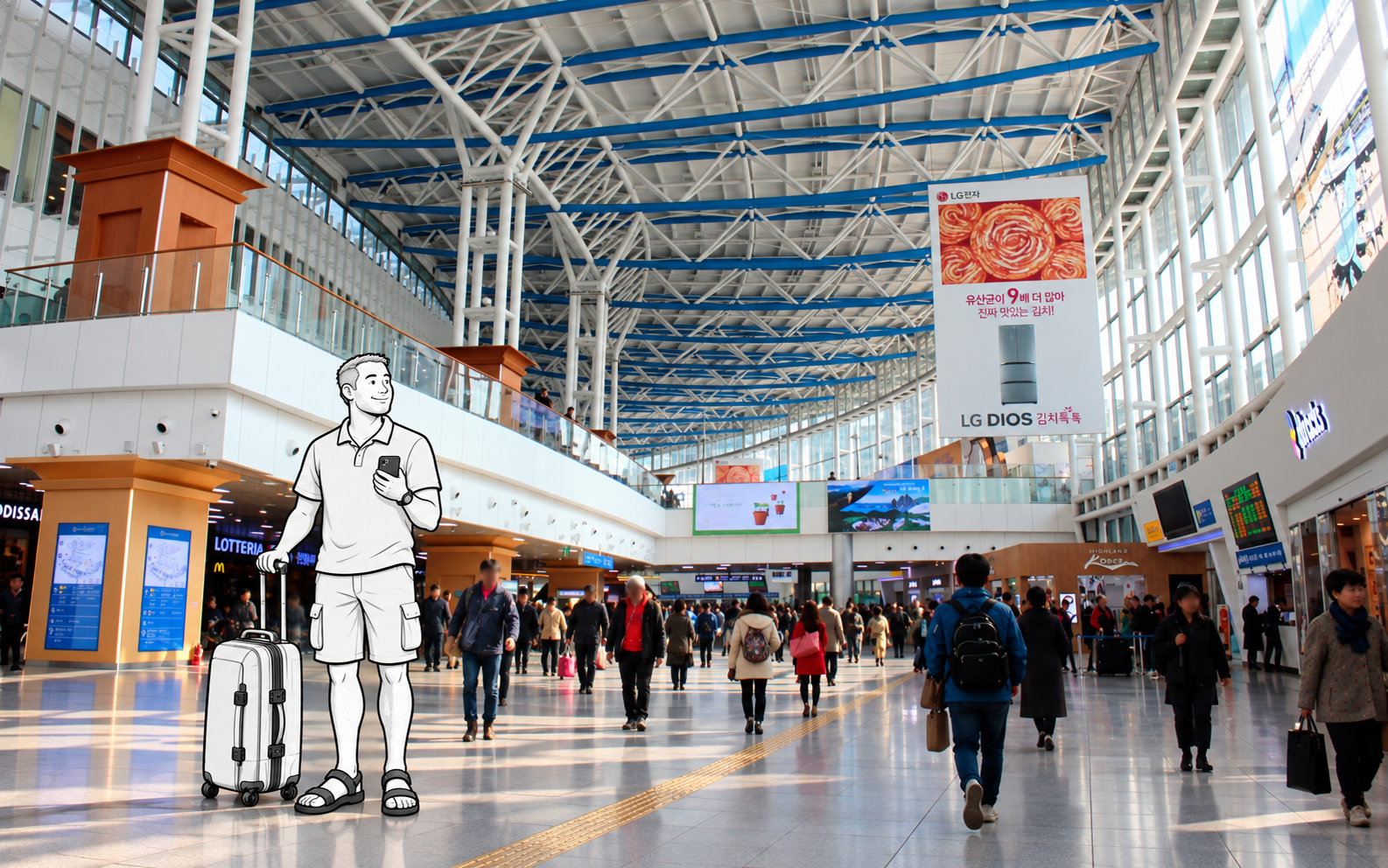
For intercity travel, check the departure station, service, and ticket before heading to the platform.
AI-assisted photo-based composite. Historical Seoul Station concourse photo, not a current departure display or platform map. Phone content is intentionally unreadable. Background: Seoul Station Concourse.jpg by Minseong Kim / Wikimedia Commons, CC BY-SA 4.0. Cropped/reframed and edited with AI-generated character overlays; small background details may differ. Derivative illustration under CC BY-SA 4.0.
Common transportation mistakes
The first mistake is assuming Google Maps alone will be enough for all Korea routing. It can help with saved places and broad planning, but local transit and walking details are often better in Korea-focused map apps. The second mistake is buying several cards before understanding what each balance can actually pay for. The third mistake is ignoring station exits and hotel access.
The fourth mistake is using taxis only as an emergency plan without setting up an app or saving the Korean hotel address. The fifth mistake is choosing intercity tickets without checking the station location. A train station that is far from your hotel or attraction can remove the advantage of a fast train.
FAQ
Do I need a Tmoney card in Korea?
Most first-time visitors should have a transport card if they will use subway or buses. It is not the only payment object you may use, but it makes daily city transit simpler.
Can I pay for all Korea transportation by credit card?
No. Credit cards can help with many purchases and some tickets, but subway and bus use is smoother with a transport card, and some top-up or small-payment situations still require Korean won cash.
Is public transportation hard for foreign visitors?
The core system is usable, especially in Seoul, but first-time friction comes from route apps, station exits, card top-ups, language, and luggage. Preparing those details makes the system much easier.
Should I rent a car in Korea?
Most first-time visitors to Seoul do not need a car. Consider a rental only for specific regional routes, especially parts of Jeju or countryside travel, and check license, insurance, parking, and navigation requirements first.


