
Quick summary: Choose ordinary Tmoney for a flexible trip or travel outside Seoul. Choose Tmoney Travel Card only if you will use a current partner discount. Choose Travel Card Plus if you also want WOWPASS prepaid shopping and currency-exchange functions. Choose a Climate Card Short-Term Pass only when most of your rides stay inside its Seoul service area and the pass price beats what you would pay per journey.
- Best default: ordinary Tmoney, about ₩3,000–₩5,000 for the card plus the transit balance you load
- Best for tourist perks: Tmoney Travel Card, ₩4,000 plus transit balance
- Best for prepaid local spending: Tmoney Travel Card Plus, ₩6,000 plus separate Tmoney and WOWPASS balances
- Best for heavy Seoul transit: Climate Card Short-Term Pass, ₩5,000–₩20,000 plus a ₩3,000 physical card
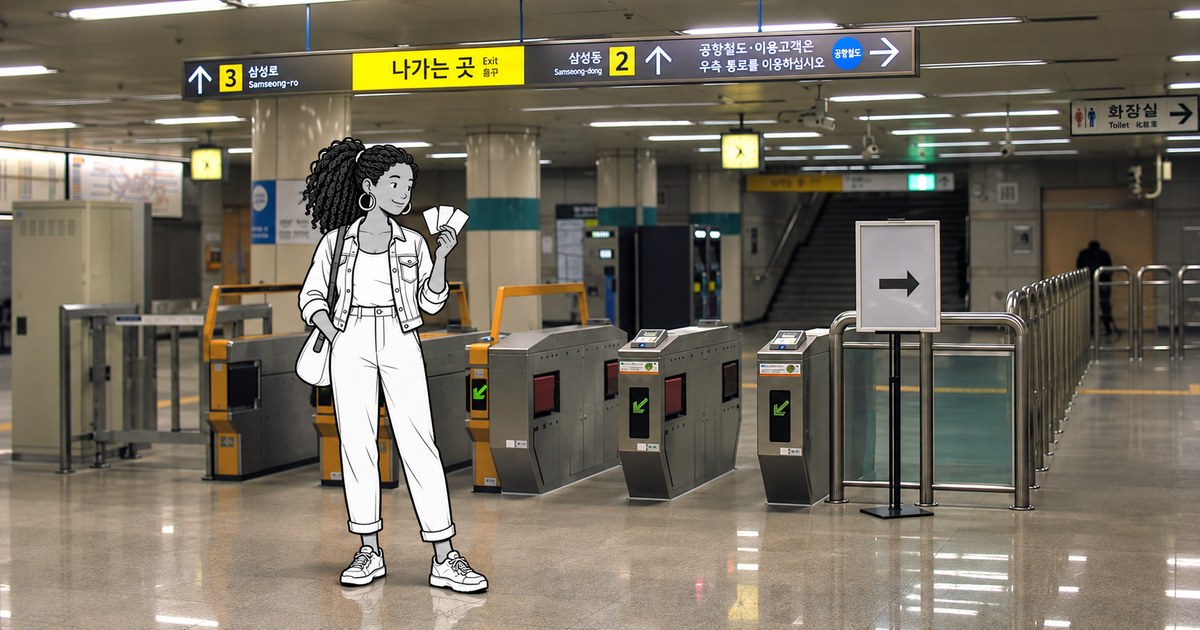
Short answer: which Korea transit card should you buy?
Most first-time visitors should buy ordinary Tmoney. It works well when the itinerary is flexible, includes the airport or another city, or mixes short and long days. You pay for the rides you take and do not need to keep checking whether a route is inside a pass boundary.
The visitor cards are useful for narrower reasons. Tmoney Travel Card adds partner discounts. Travel Card Plus adds a separate WOWPASS prepaid-payment and currency-exchange system. Neither gives unlimited subway or bus travel. The Climate Card Short-Term Pass does give unlimited rides, but only on covered Seoul transport during its valid period.
The right question is not “Which card has the longest benefit list?” It is “Which card costs less for the journeys and purchases already in my itinerary?”
Compare the four current choices
| Product | Card/pass price | How transit is charged | Best for | Main catch |
|---|---|---|---|---|
| Ordinary Tmoney | About ₩3,000–₩5,000, balance separate | Pay per ride | Flexible routes, airport travel, multiple cities | Physical-card reloads normally need Korean-won cash |
| Tmoney Travel Card | ₩4,000, balance separate | Pay per ride | Travelers who will use a listed tourism or shopping benefit | It is not an unlimited pass; benefits and participating merchants can change |
| Tmoney Travel Card Plus | ₩6,000, balances separate | Pay per ride on the Tmoney balance | Travelers who want visitor perks plus WOWPASS prepaid shopping and exchange | The shopping balance does not automatically fund transit |
| Climate Card Short-Term Pass | ₩5,000–₩20,000 plus ₩3,000 physical card | Unlimited covered rides during the period | Transit-heavy days mostly inside the Seoul service area | Airport, regional, and several metropolitan routes are excluded |
Choose ordinary Tmoney for flexibility
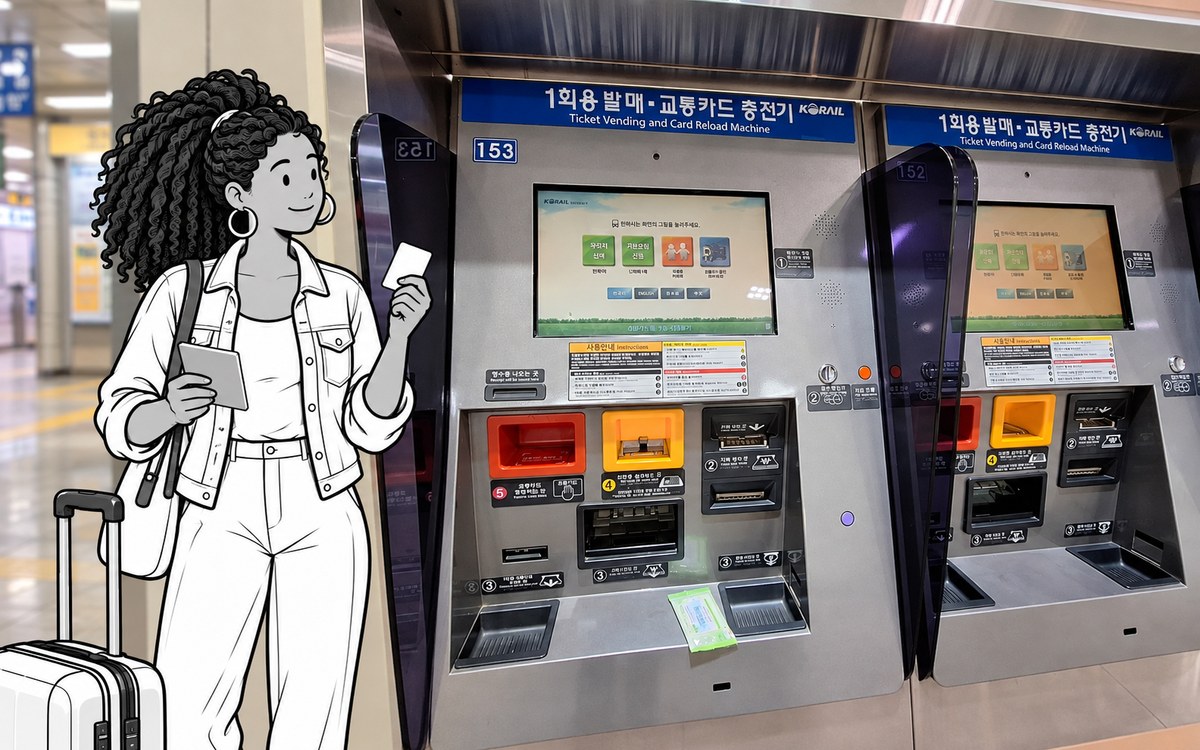
Ordinary Tmoney is a stored-value card. Buy the card, add money, then tap on covered subways and buses. It is widely accepted across Korea, so the same card can follow you from Seoul to Busan or another city. It also works for the AREX All-Stop train and many other Tmoney-enabled services.
The card itself usually costs about ₩3,000–₩5,000. The transit balance is extra. A regular physical card is normally reloaded with Korean-won cash, so keep a small cash reserve. For the exact purchase, reload, tap, transfer, and refund routine, use the Tmoney subway and bus basics guide.
Choose ordinary Tmoney when your days are not final, you expect only two or three journeys on some days, you will leave Seoul, or you do not want to make route decisions around pass coverage. Paying slightly more on one busy day can be worth it if the card saves you from buying a second product or taking an awkward route.
Choose Tmoney Travel Card only for benefits you can name
Tmoney Travel Card costs ₩4,000 and uses the same pay-per-ride transit model as ordinary Tmoney. Its extra feature is access to benefits at participating tourism, shopping, and cultural partners. Tmoney lists convenience stores and the Incheon Airport bus ticket office as sales locations.
This card is often an easy choice when it is available because its purchase price is close to a regular card. Still, do not value a long benefit list at face value. Open the current partner list and identify a discount you already plan to use. If the offer sends you across the city or makes you buy something you would otherwise skip, it is not a saving.
Travel Card does not include unlimited subway rides, a prepaid shopping-card balance, or automatic airport transport. Load its Tmoney transit balance before the first ride.
Choose Travel Card Plus when you also need a payment tool
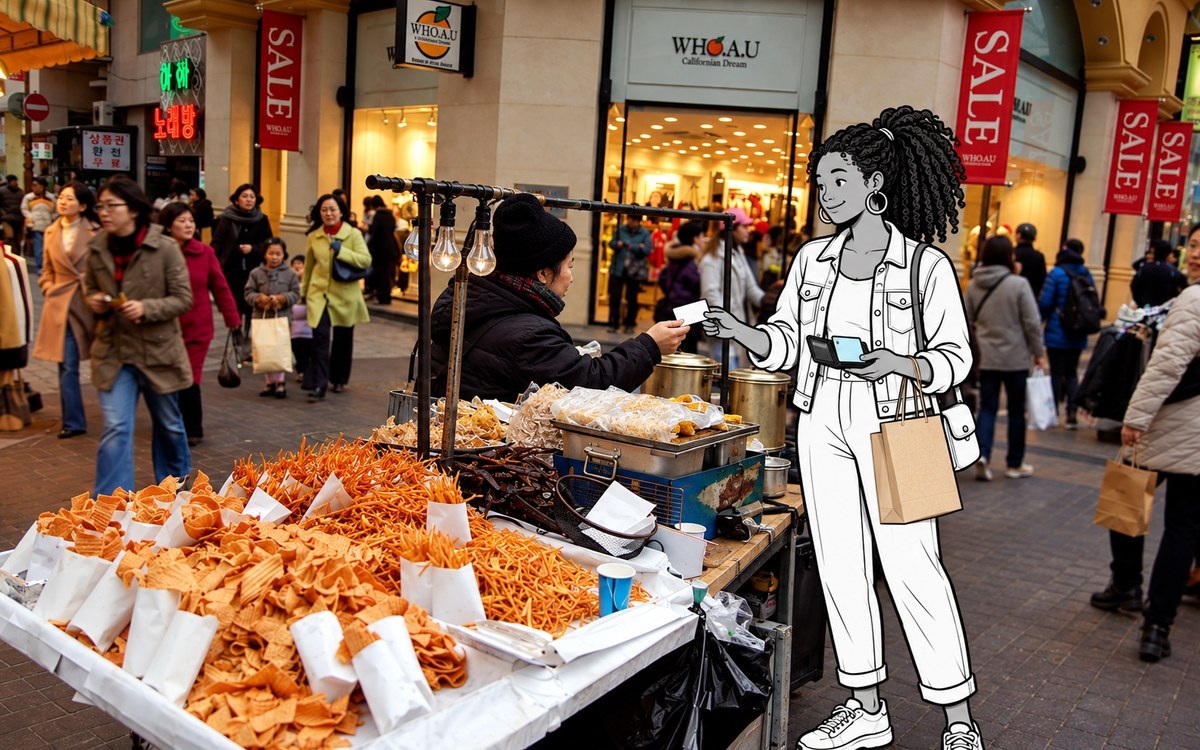
Tmoney Travel Card Plus costs ₩6,000. It includes the Travel Card's transit function and partner benefits, then adds WOWPASS IC payments, currency exchange, and app or kiosk balance management. Tmoney lists nationwide convenience stores as sales locations.
The important detail is balance separation. The WOWPASS balance pays participating offline merchants through the card's IC chip. The Tmoney balance pays subway and bus fares when you tap. WOWPASS's official guide says the transit balance must be topped up separately from the shopping balance.
Plus is useful when your overseas card is unreliable, charges high foreign-transaction fees, or you want a prepaid Korea spending budget and exchange tools in one physical card. It is unnecessary if your international card works well and you only need transport. In that case, ordinary Tmoney is simpler.
For the broader payment choice, compare WOWPASS, Tmoney, and overseas credit cards before paying extra for Plus.
Choose a Climate Card for enough covered Seoul journeys
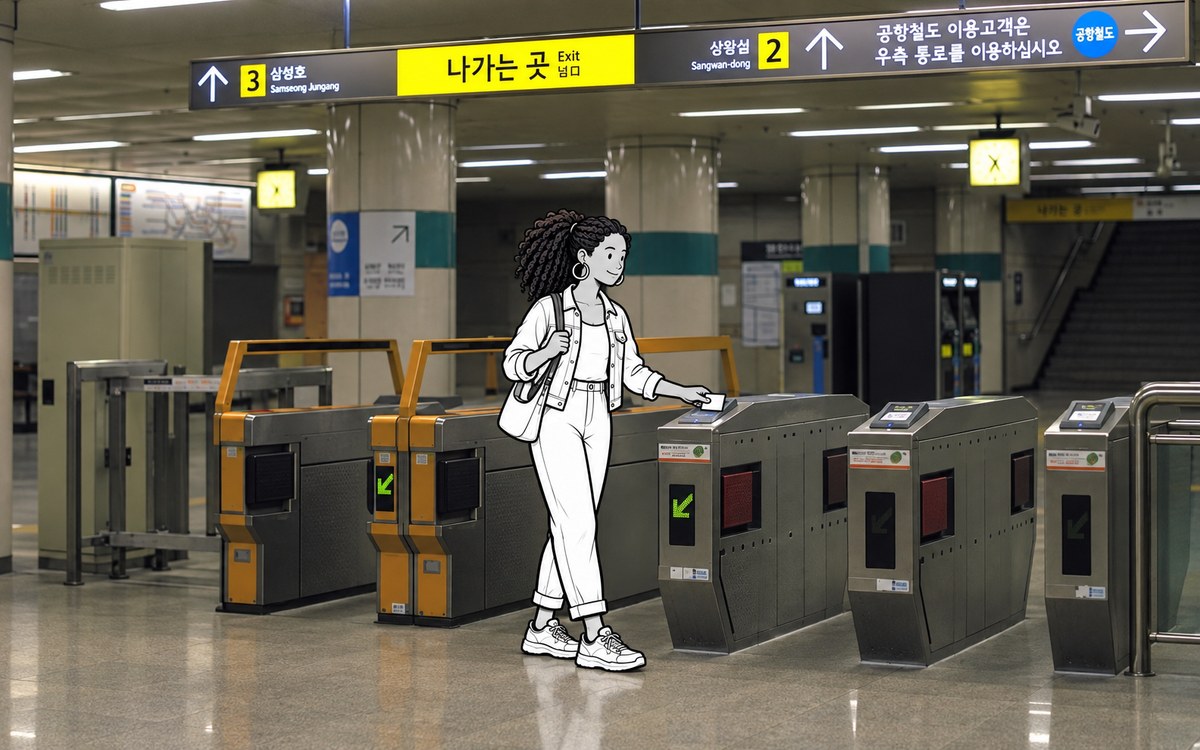
The Climate Card Short-Term Pass gives unlimited rides during a fixed one-, two-, three-, five-, or seven-day period. The pass loads cost ₩5,000, ₩8,000, ₩10,000, ₩15,000, and ₩20,000. A physical card costs another ₩3,000. Short-term validity starts on the day you load it; you cannot load it in advance for a later start.
The service area matters more than the headline price. The pass covers specified Seoul-service subway sections and Seoul-licensed city and town buses. It excludes the Sinbundang Line, GTX, airport and intercity buses, non-Seoul-licensed buses, and subway travel outside the current service range. Short-term passes do not include Ttareungi or Hangang Bus.
It cannot be used to board AREX at Incheon Airport, so do not buy it as your airport-to-Seoul solution. VisitKorea says that from October 1, 2026, Climate Card use is limited to Seoul while the short-term passes continue and the old 30-day products end. Check the current range shortly before travel if your hotel or day trip is near the city boundary.
iPhone visitors need the physical Climate Card; mobile issue is for supported Android devices. Since March 17, 2026, new machines at 273 stations on Seoul Metro Lines 1–8 accept international cards for Short-Term Pass purchase or reload, with an average service fee of about 3.7%.
When does the Climate Card cost less?
The current adult base fare is ₩1,550 for the Seoul metropolitan subway and ₩1,500 for a standard Seoul city bus. Using those fares, the table below shows when the pass load begins to compete with pay-as-you-go Tmoney. It is a rough planning test, not a guarantee.
| Pass | Pass load | Rough break-even | Trip pattern that may fit |
|---|---|---|---|
| 1 day | ₩5,000 | About 4 separate base-fare journeys | Morning market, afternoon museum district, evening neighborhood, late return |
| 2 days | ₩8,000 | About 6 journeys total | Three or more covered journeys on both days |
| 3 days | ₩10,000 | About 7 journeys total | Two or three covered journeys most days |
| 5 days | ₩15,000 | About 10–11 journeys total | Hotel outside the main sightseeing area with daily returns |
| 7 days | ₩20,000 | About 13–14 journeys total | A full Seoul week with frequent covered transit |
The calculation excludes the ₩3,000 physical Climate Card. If you are choosing between two new physical cards, ordinary Tmoney also has a purchase price, so much of that difference cancels out. If you already own Tmoney, include the full ₩3,000 Climate Card cost before switching.
Count separate fare-paying journeys, not every tap. A bus-to-subway transfer within the integrated transfer window often costs one base fare plus any distance charge, rather than two full fares. Also remove every airport bus, Sinbundang, GTX, regional bus, or out-of-range journey from your Climate Card calculation.
What happened to Korea Tour Card?
Korea Tour Card has been discontinued and is no longer sold. Tmoney says people who already have one can continue to receive the same benefits at participating merchants as Tmoney Travel Card users. If an old blog tells you to buy Korea Tour Card at the airport, look for Tmoney Travel Card instead.
The name change matters because search results and older guide pages can make several generations of tourist cards look like separate current products. Do not pay a reseller premium for a discontinued card.
Common card-choice mistakes
- Calling Travel Card an unlimited pass: it charges each ride from a stored Tmoney balance.
- Assuming Travel Card Plus has one balance: Tmoney transit and WOWPASS shopping balances are separate.
- Counting transfers as full-price rides: an eligible bus-to-subway chain may not add a second base fare.
- Buying Climate Card for airport arrival: it cannot be used to board AREX at Incheon Airport and does not cover airport buses.
- Ignoring the service boundary: a route that appears on a Seoul-area map may still include an excluded operator or station.
- Chasing a partner discount: a benefit saves nothing if it changes your route or prompts an unplanned purchase.
- Searching for Korea Tour Card: sales have ended; the current replacement is Tmoney Travel Card.
Which card fits your itinerary?
- Three days in Seoul with two or three journeys a day: use ordinary Tmoney unless every journey is covered and your exact fare calculation favors a three-day Climate Card.
- One packed sightseeing day with four or more separate covered journeys: a one-day Climate Card can beat pay-as-you-go fares, especially if you already own the physical card.
- Five to seven days inside Seoul with a hotel away from the center: calculate a five- or seven-day Climate Card, then remove airport and excluded-route journeys before deciding.
- Seoul plus Busan, Jeju, or another region: ordinary Tmoney is the safest default because it follows the trip across cities.
- You will use a named shopping or attraction benefit: choose Tmoney Travel Card if the current discount is worth more than any price difference.
- You want prepaid shopping, currency exchange, and transit in one physical card: choose Travel Card Plus, but manage its two balances separately.
- Your plans may change after arrival: start with ordinary Tmoney. Buy a Climate Card later only when the covered schedule is firm.
Related Korea Travel 101 guides
Sources
- Tmoney: current cards for international visitors and Korea Tour Card discontinuation
- Tmoney: Travel Card Plus launch, price, sales locations, and functions
- Tmoney: current visitor transit-card comparison
- Tmoney: stored-value card top-up, transfer, and refund guide
- WOWPASS: separate shopping and Tmoney transit balances
- VisitKorea: current transportation-card prices and Climate Card transition
- Seoul Metropolitan Government: Climate Card prices, service range, purchase, use, and refunds
- Seoul Metropolitan Government: international-card machines introduced in 2026
- Seoul Metropolitan Government: current subway fares
- Seoul Metropolitan Government: current bus fares and transfer rules
Product prices, transit coverage, partner-benefit positioning, fare assumptions, and purchase methods checked 2026-09-21; next review due by 2026-11-20.
Image credits: subway-gate backgrounds, DMC Station gate by IRTC1015, public domain; reload-machine background, Seoul subway ticket vending and card reload machine by LandAndTree, CC BY 4.0; shopping-street background, Seoul — Myeongdong 03 by thelearnr, CC BY 2.0. Cropped and composited with Amara line art by Korea Travel 101.


