
Quick answer: Keep Korean-won cash for a standard physical Tmoney card. Tmoney's official foreign-language guide still gives cash as the top-up method at participating convenience stores, subway machines, information centers, and Tmoney Town.
- Standard physical Tmoney: use Korean-won cash for the dependable reload method.
- Official limits: add ₩1,000–₩90,000 per transaction in ₩1,000 units; the balance cannot exceed ₩500,000.
- International-card exception: compatible Seoul machines accept overseas cards for Climate Card short-term passes and single-journey subway tickets, not for ordinary Tmoney stored value.
- Before leaving Korea: spend the balance down or allow time for a refund, which normally costs ₩500 and does not include the card price.
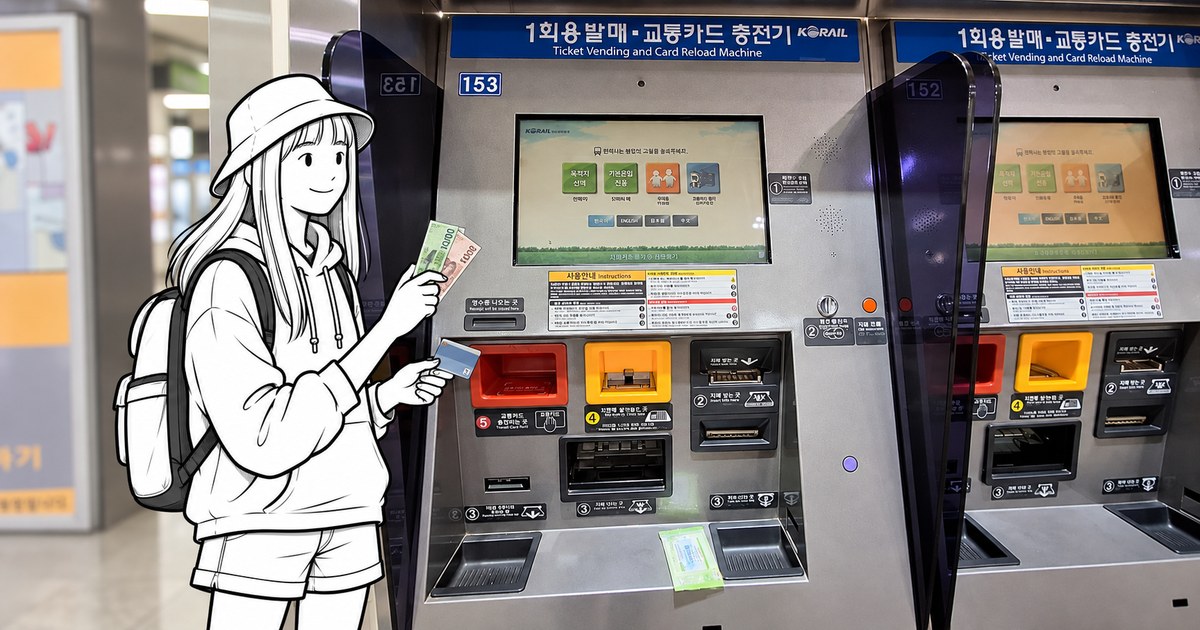
Why does cash still matter for Tmoney?
Korea accepts cards for most everyday purchases, but that does not mean an overseas bank card can reload every transit product. A standard physical Tmoney card holds prepaid transit value. Tmoney's current visitor guide tells users to present the card with Korean-won cash at an authorized top-up location.
That is the useful rule to plan around. An individual shop or machine may change, but cash is the method the operator currently documents for ordinary physical-card top-ups. Carrying a small won reserve prevents the awkward situation where your credit card works for lunch but cannot add value to the card you need for the bus.
This page is about standard physical Tmoney. For buying the card, tapping on buses and subways, and transfer rules, use the complete Tmoney basics guide.
Where can you top up a standard physical Tmoney card?
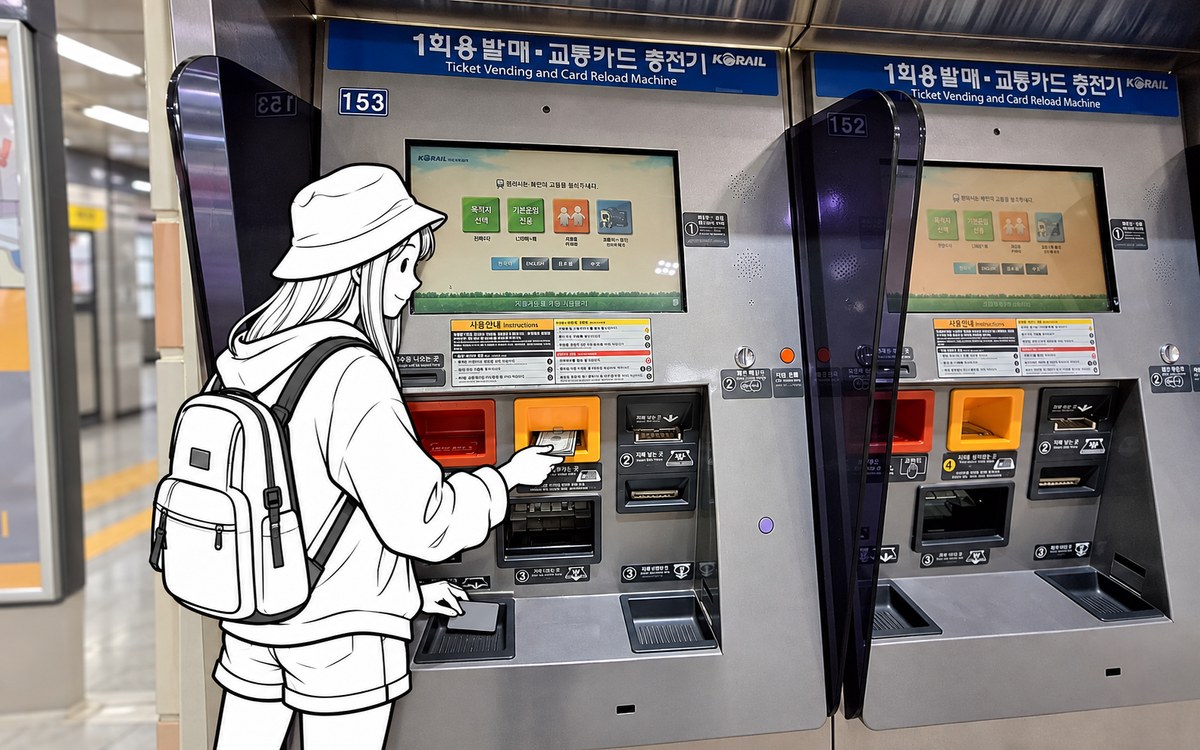
Tmoney lists participating convenience stores, subway top-up machines, subway information centers, and Tmoney Town as reload locations. At a convenience store, hand the cashier your card and the amount in Korean-won cash. At a station machine, choose the transport-card reload function, place the card on the reader, and follow the language prompts.
Top-ups are available in ₩1,000 units. The official range is ₩1,000–₩90,000 in one transaction, with a maximum stored balance of ₩500,000. Those limits are capacity rules, not a recommendation to load a large amount.
For a short trip, keep the balance modest and add more when needed. The purchase price of the physical card is not part of its stored balance and is not returned when you request a balance refund. Loading only what you expect to use also limits the loss if an unregistered card disappears.
Can you top up Tmoney with an international credit card?
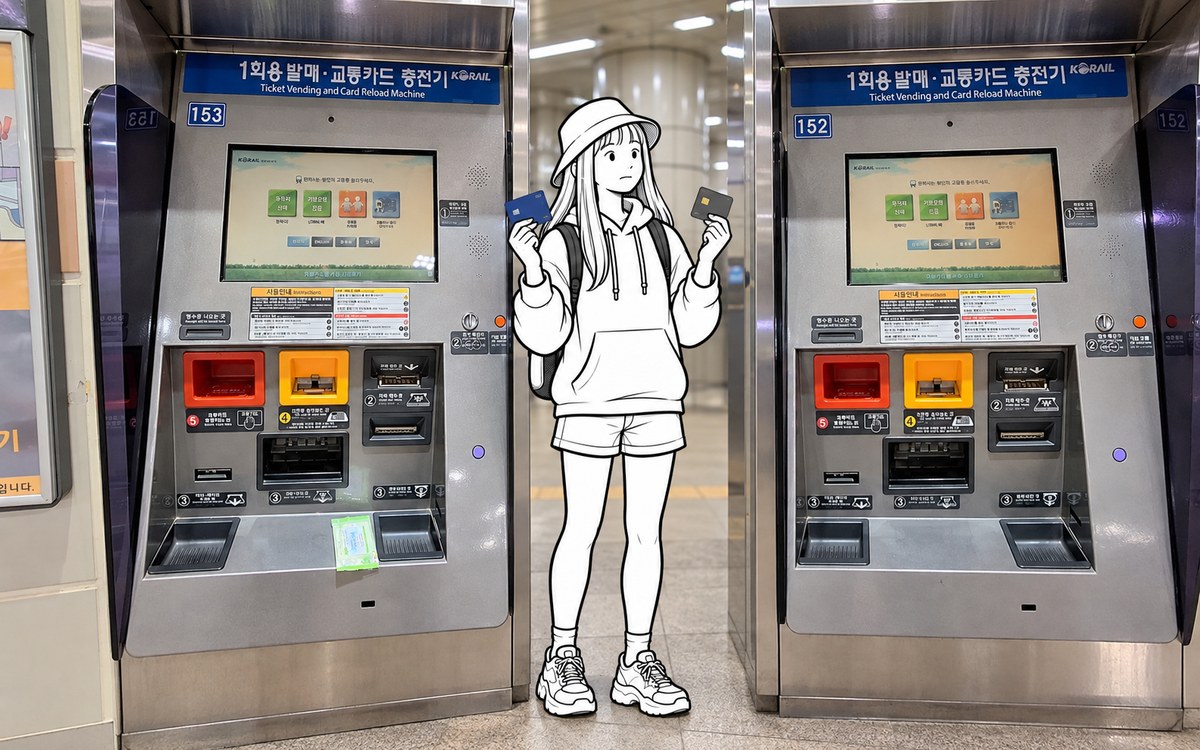
Do not rely on it for a standard physical card. Seoul's 2026 international-card announcement covers two named products: Climate Card short-term passes and single-journey subway tickets. It does not say that the same machines reload ordinary Tmoney stored value.
This distinction is easy to miss because the products can appear near each other in the same station. A standard Tmoney card stores money and deducts a fare per ride. A Climate Card holds a time-limited Seoul pass. A single-journey card is one subway ticket. Paying by international card for either exception does not add money to your standard Tmoney balance.
What are the two card-payment exceptions?
| Product | What an international card can do | What it does not do |
|---|---|---|
| Climate Card short-term pass | Purchase or reload an eligible 1-, 2-, 3-, 5-, or 7-day pass at a compatible new machine | It does not add stored value to a standard Tmoney card |
| Single-journey subway ticket | Buy one subway journey at a compatible new machine | It is not reusable Tmoney and does not provide ordinary card transfers |
| Standard physical Tmoney | No international-card reload was announced for this product | Do not infer support because the machine accepts a foreign card for the two products above |
On March 17, 2026, Seoul introduced international credit and debit card payments at 440 new machines in 273 stations on Lines 1–8. Supported mobile payments were included. The city states that an average service fee of about 3.7% applies to those international-card transactions.
A single-journey card also requires a ₩500 deposit. After the ride, insert the used card into the deposit-refund machine at your destination to get that deposit back. The ticket is for the subway only; it is a useful fallback if you reach a compatible station without cash, but it is not a replacement for Tmoney on a multi-ride or bus-and-subway itinerary.
The Climate Card is a separate Seoul pass with its own coverage and refund terms. Compare it with ordinary stored-value Tmoney in the Tmoney versus tourist passes guide before buying one solely because it accepts your bank card.
What should you do if you arrive without Korean cash?
- At a compatible Seoul subway machine: buy a single-journey ticket with your international card, then obtain a small amount of won before your next Tmoney reload.
- Using only Seoul transit for several days: check whether a Climate Card short-term pass fits your route and ride count.
- Planning to use buses or travel beyond the Climate Card area: get Korean won and load a standard physical Tmoney card.
- At Incheon Airport: separate the three tasks—buying the card, adding transit value, and getting cash. The airport arrival setup guide explains where each step fits.
An ATM or currency exchange can solve the cash problem, but fees and card compatibility vary. The cash, cards, and ATMs guide covers that decision without turning this Tmoney guide into a banking article.
How do standard Tmoney refunds work?
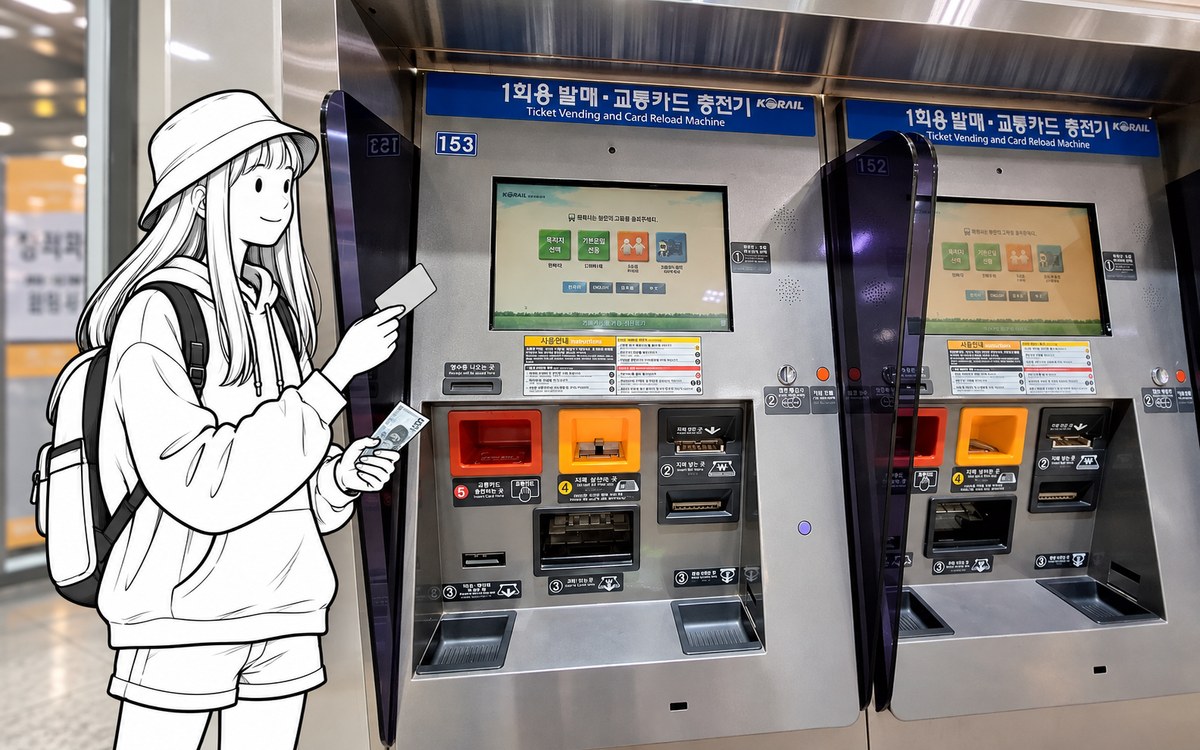
For a standard physical Tmoney card, present the card at a participating refund location and ask for the remaining balance in Korean-won cash. The physical card's purchase price is not refundable, and Tmoney charges a ₩500 service fee.
VisitKorea says balances over ₩50,000 must be handled at Tmoney Town near Seoul Station Exit 10. Smaller eligible balances can be refunded at participating convenience stores, although individual store and product limits can apply. Do not wait until the airport gate if you have a large balance.
A partial refund has narrower rules. Tmoney limits it to plate-type Tmoney cards with balances from ₩10,000 to ₩50,000, in ₩10,000 units, at Tmoney Town or a Tmoney service center in a subway station. For most short-term visitors, spending the card down and requesting one final balance refund is simpler.
Do not mix up three different refunds
| What you are returning | Refund rule |
|---|---|
| Standard Tmoney stored balance | Cash refund in Korean won; card price excluded; normally a ₩500 service fee; high balances require Tmoney Town |
| Single-journey subway card | Return the used card to a station deposit-refund machine to recover its ₩500 deposit |
| Climate Card pass | Separate pass rules: charged amount minus transit use and a ₩500 fee, requested before expiry; visitors without a Korean bank account may need Tmoney headquarters |
These processes are not interchangeable. A station deposit machine does not refund a Tmoney balance, and a convenience-store Tmoney refund is not a Climate Card pass cancellation.
Common Tmoney top-up mistakes
- Assuming card-friendly Korea means card-funded Tmoney: ordinary purchases and transit stored value use different payment systems.
- Reading “international cards accepted” without checking the product: the 2026 Seoul rollout names Climate Card short-term passes and single-journey tickets.
- Loading too much near the end of the trip: the card price is not refunded, the balance refund costs ₩500, and large balances require a special location.
- Confusing a Climate Card with Tmoney balance: one is a time-limited Seoul pass; the other deducts stored value per ride.
- Throwing away a single-journey card: return it at the destination to recover the ₩500 deposit.
- Expecting every convenience store to handle every refund: participating locations and amount limits apply.
Which setup fits your situation?
- You want the simplest multi-city setup: buy a standard physical Tmoney card and keep a small Korean-won reserve for reloads.
- You have no cash for your first Seoul subway ride: use a compatible international-card machine for a single-journey ticket, then get cash before relying on Tmoney.
- You will ride frequently within the Climate Card service area: compare the short-term pass before adding a large standard Tmoney balance.
- You are leaving with a small balance: spend it at an eligible Tmoney merchant or ask a participating convenience store about a refund.
- You are leaving with more than ₩50,000: allow time to visit Tmoney Town near Seoul Station Exit 10.
Related Korea Travel 101 guides
Sources
- Tmoney foreign-language guide: standard-card cash top-ups, limits, locations, and refund rules
- Seoul Metropolitan Government: international-card machines for Climate Card short-term passes and single-journey tickets
- Seoul Metropolitan Government: Climate Card product, payment, and refund rules
- Seoul Metropolitan Government: single-journey subway card and ₩500 deposit refund
- VisitKorea: current transportation-card locations and high-balance Tmoney refunds
Standard Tmoney top-ups and refunds, Climate Card exceptions, and single-journey ticket payment checked September 21, 2026; next review due November 20, 2026.
Photograph: Ticket Vending and Card Reload Machine — Seoul Metropolitan Subway by LandAndTree, CC BY 4.0. Cropped and composited in four editorial views; Elena illustration added by Korea Travel 101.


