
Quick summary: First-time Korea visitors should add regional travel only after the Seoul base is stable. Busan is the easiest second city by train, Gyeongju is the strongest history stop, Jeju needs a separate transport plan, and the DMZ is a source-sensitive day trip rather than a normal sightseeing area. For most 7-10 day trips, choose one major region after Seoul instead of trying to add every famous place.
Best second city: Busan if you want beaches, markets, coastal walks, and easy train access.
Best history stop: Gyeongju if you want Silla tombs, temples, and walkable heritage zones.
Best nature add-on: Jeju if you can give it enough days and plan car, taxi, bus, or tour movement honestly.

Short answer: which Korea regions should first-time visitors add?
Most first-time visitors should choose Seoul plus one regional focus. Busan is the easiest extension because KTX and other trains connect it with Seoul, and the city has clear tourist zones such as Haeundae, Gwangalli, Nampo, Gamcheon, and Yeongdo. Gyeongju is best for travelers who care about history and do not mind a slower, heritage-focused pace. Jeju is best when you can spend at least a few days and solve the island transportation question before booking.
The DMZ is different from other regions. It is not a normal free-roaming attraction; access rules, tour availability, security conditions, and JSA/Panmunjom access can change. Treat it as a guided or officially controlled day trip and check current rules shortly before travel.
Regional choices at a glance
Region | Best for | Minimum practical time | Main planning risk |
|---|---|---|---|
Busan | Beaches, seafood markets, coastal neighborhoods, city views | 2 nights | Spreading attractions too far across the city |
Gyeongju | Silla history, temples, tombs, night views, slower walking days | 1 night | Trying to do Bulguksa, Seokguram, and downtown too tightly |
Jeju | Volcanic landscapes, coastlines, Hallasan, Seongsan, Udo, waterfalls | 3 nights | Underestimating island distances and transport friction |
DMZ / Paju | Modern Korean history and border context | Half to full day | Assuming access is always available or self-guided |
Seoul day trips | Suwon, Gapyeong, Incheon, nearby heritage and nature | 1 day | Adding day trips before Seoul basics are done |
Busan works best as a real second city
Busan is the cleanest regional add-on for many first-time visitors because it feels different from Seoul but does not require a flight. Use Busan for coastal views, markets, beaches, hillside neighborhoods, and a slower evening rhythm. The mistake is treating Busan as one compact attraction zone. Haeundae, Gwangalli, Nampo, Gamcheon, Yeongdo, and Songdo are spread out, so days should be grouped by area.
Start with the Busan attractions guide and the Busan 3-day itinerary without a car if Busan is your first regional stop.
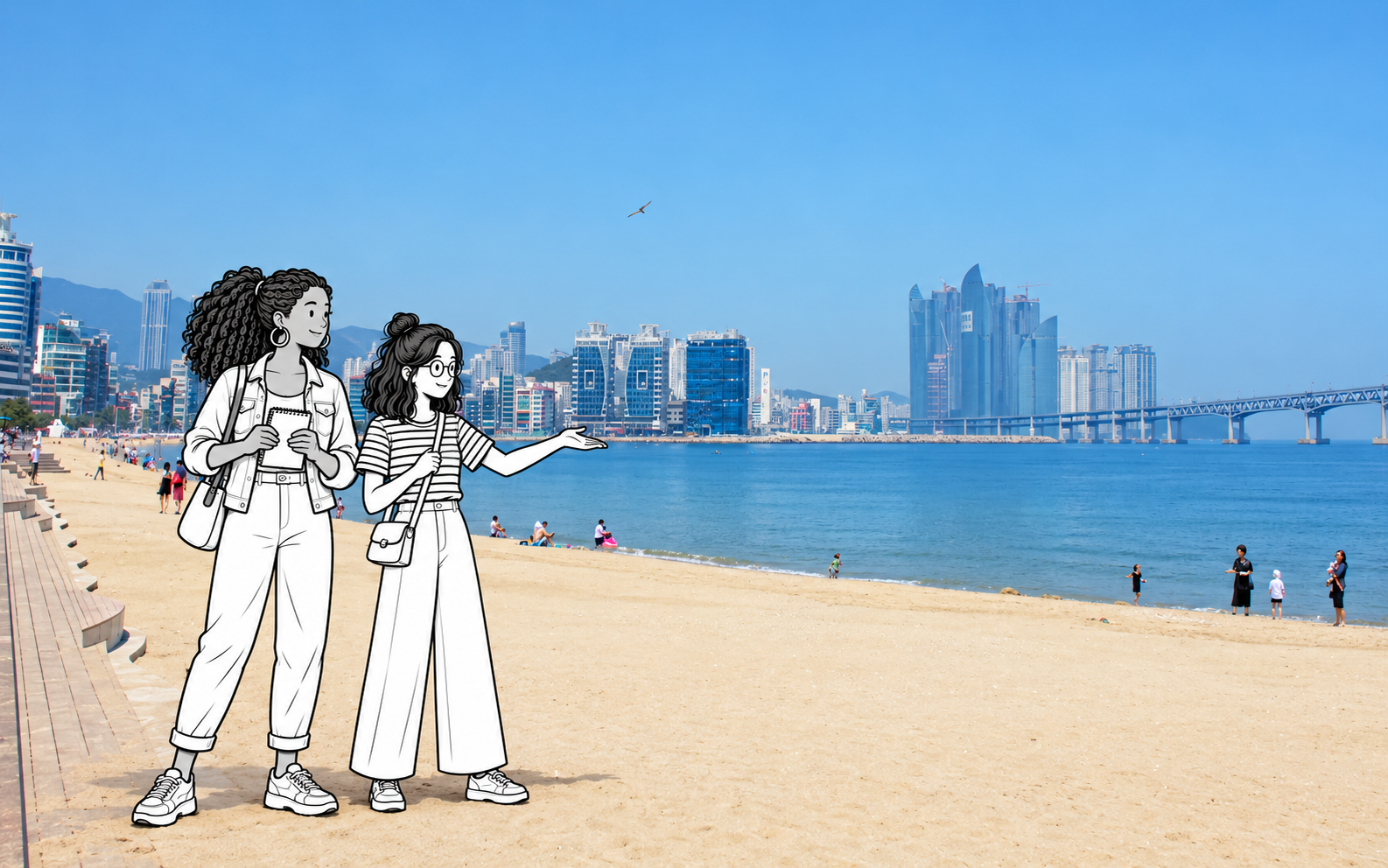
Give your regional stop time to breathe: choose one main area rather than crossing the city for every sight.
AI-assisted photo-based composite. Gwangalli background photographed 2011, reconstructed for an illustrative planning scene. Skyline is not evidence of current buildings or beach services. Background: Gwangalli Beach.jpg by Chelsea Hicks / Wikimedia Commons, CC BY 2.0. Cropped/reframed and edited with AI-generated character overlays; small background details may differ.
For the train leg from Seoul, see how to book the Seoul to Busan KTX with a foreign card, including ticket retrieval and what to check before departure.
Gyeongju is the best first history side trip
Gyeongju is useful because many major sights connect through a clear historical theme. Downtown tombs, Cheomseongdae, Donggung Palace and Wolji, Hwangnidan-gil, Bulguksa, and Seokguram all help visitors understand why the city is often framed as Korea’s ancient capital. It is slower than Seoul or Busan, and that is the point.
Do not compress Gyeongju into a rushed stop between trains unless you only want one downtown walk. For temples and the UNESCO sites, allow real travel time. Use Gyeongju attractions for first-time visitors before deciding whether to sleep there.
Jeju needs a transport plan before an attraction list
Jeju is not hard because the sights are unclear; it is hard because the island is wide, weather changes plans, and many attractions are not close together. Seongsan Ilchulbong, Udo, Hallasan, waterfalls, western beaches, tea fields, and coastal viewpoints can all be worthwhile, but they do not belong in one overloaded day.
If you do not rent a car, plan around buses, taxis, private drivers, or tours with realistic buffers. If you do rent, check license, insurance, parking, weather, and fatigue. Start with Jeju attractions for first-time visitors and the existing Jeju slow route guide.
Common regional planning mistakes
The first mistake is adding too many regions to a short trip. Seoul, Busan, Gyeongju, and Jeju can all be excellent, but they do not all belong in a seven-day first trip. The second mistake is booking hotels before deciding how you will move between regions. The third mistake is treating Jeju like a city with subway-style movement.
The fourth mistake is assuming every “day trip from Seoul” is equally easy. DMZ tours, Suwon, Gapyeong, and rail day trips all have different booking and timing risks. Choose the day trip that solves your interest, not the one that appears most often on a list.
More practical regional guides
Use these related Korea Travel 101 guides when you want a more specific route, attraction, or regional itinerary.
FAQ
Is Busan or Jeju better for a first Korea trip?
Busan is usually easier because it connects by train and has strong city transit. Jeju is better for nature and volcanic landscapes, but it needs more transport planning and more time.
Can I do Gyeongju as a day trip?
You can do a limited Gyeongju day trip, especially from Busan, but one night is better if you want both downtown heritage and Bulguksa or Seokguram without rushing.
Should I add the DMZ to a first Korea trip?
Add the DMZ if modern Korean history is a real interest and you can handle a controlled tour day. Check current access rules close to your travel date.


