
Quick summary: First-time Busan visitors should group attractions by coastline and neighborhood. Haeundae and Gwangalli are the easiest beach-and-evening areas, Nampo and Jagalchi work well with markets and harbor atmosphere, Gamcheon is a hillside village walk, and Taejongdae or Yeongdo gives a stronger coastal-cliff day. Busan is spread out, so choose clusters instead of jumping between every famous spot.
Best first base area: Haeundae or Seomyeon depending on beach access versus transit balance.
Best first sightseeing day: Nampo, Jagalchi, BIFF, and Gamcheon or Songdo.
Best coastal day: Haeundae, Dongbaek, Gwangalli, or Taejongdae depending on weather and walking energy.
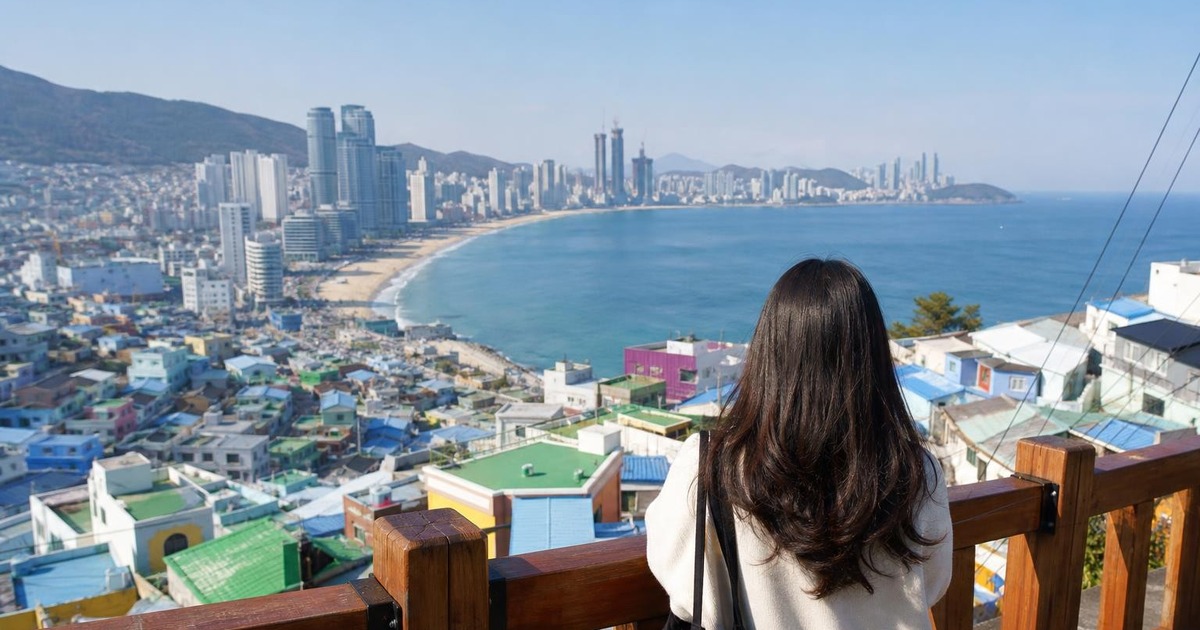
Short answer: what Busan attractions should first-time visitors prioritize?
First-time visitors should prioritize one beach zone, one market or old-downtown zone, one hillside or culture village, and one coastal viewpoint. That usually means Haeundae or Gwangalli, Nampo and Jagalchi, Gamcheon Culture Village, and Taejongdae or a Yeongdo coastal route. This gives Busan’s core identity without forcing you across the city multiple times in one day.
If you are planning more than one day, pair this guide with the Busan 3-day itinerary without a car and the existing Busan weekend without a car.
Busan attraction clusters
Cluster | Key stops | Best for | Planning note |
|---|---|---|---|
East beach | Haeundae, Dongbaek, Blue Line area | Classic beach views and easy visitor infrastructure | Can be crowded in beach season. |
Gwangalli | Gwangalli Beach, bridge views, cafes, evening food | Night view and relaxed evenings | Better as an evening block than a rushed daytime stop. |
Nampo / Jagalchi | Markets, harbor, BIFF Square, Yongdusan area | Food, shopping, old-downtown texture | Good with Gamcheon or Songdo if paced well. |
Gamcheon | Hillside alleys, viewpoints, stamp-map style walking | Colorful village views and slow exploration | Respect residents and prepare for slopes. |
Yeongdo / Taejongdae | Coastal cliffs, parks, viewpoints, maritime atmosphere | Nature and dramatic coast | Weather and walking energy matter. |
Use Haeundae and Gwangalli for Busan’s beach identity
Haeundae is the most obvious beach zone for many first-time visitors because it has hotels, restaurants, transit, and a strong visitor environment. It is useful when you want a simple beach base or a polished first Busan impression. Gwangalli is often better as an evening stop because the bridge view, cafes, and waterfront energy are strongest after the day slows down.
Do not treat Haeundae and Gwangalli as interchangeable. Haeundae is larger and more resort-like. Gwangalli feels more like a city beach evening. If your time is short, choose the one that matches your hotel and dinner plan instead of forcing both.
For a Sky Capsule ride in the Haeundae Blue Line area, use our Mipo vs Cheongsapo ticket guide to plan the boarding point and booking.
Use Nampo and Jagalchi for markets and harbor texture
Nampo, Jagalchi, BIFF Square, and nearby market streets give Busan a different feeling from the east-coast beach zones. This is where many travelers get the fish-market, street-food, harbor, and older commercial-street side of the city. It pairs naturally with Gamcheon or Songdo if you start early and keep the day focused.
Food and market routes are more enjoyable when you stay flexible. Bring cash for small purchases, use translation for food questions, and avoid assuming every vendor operates like a restaurant with a long English menu.
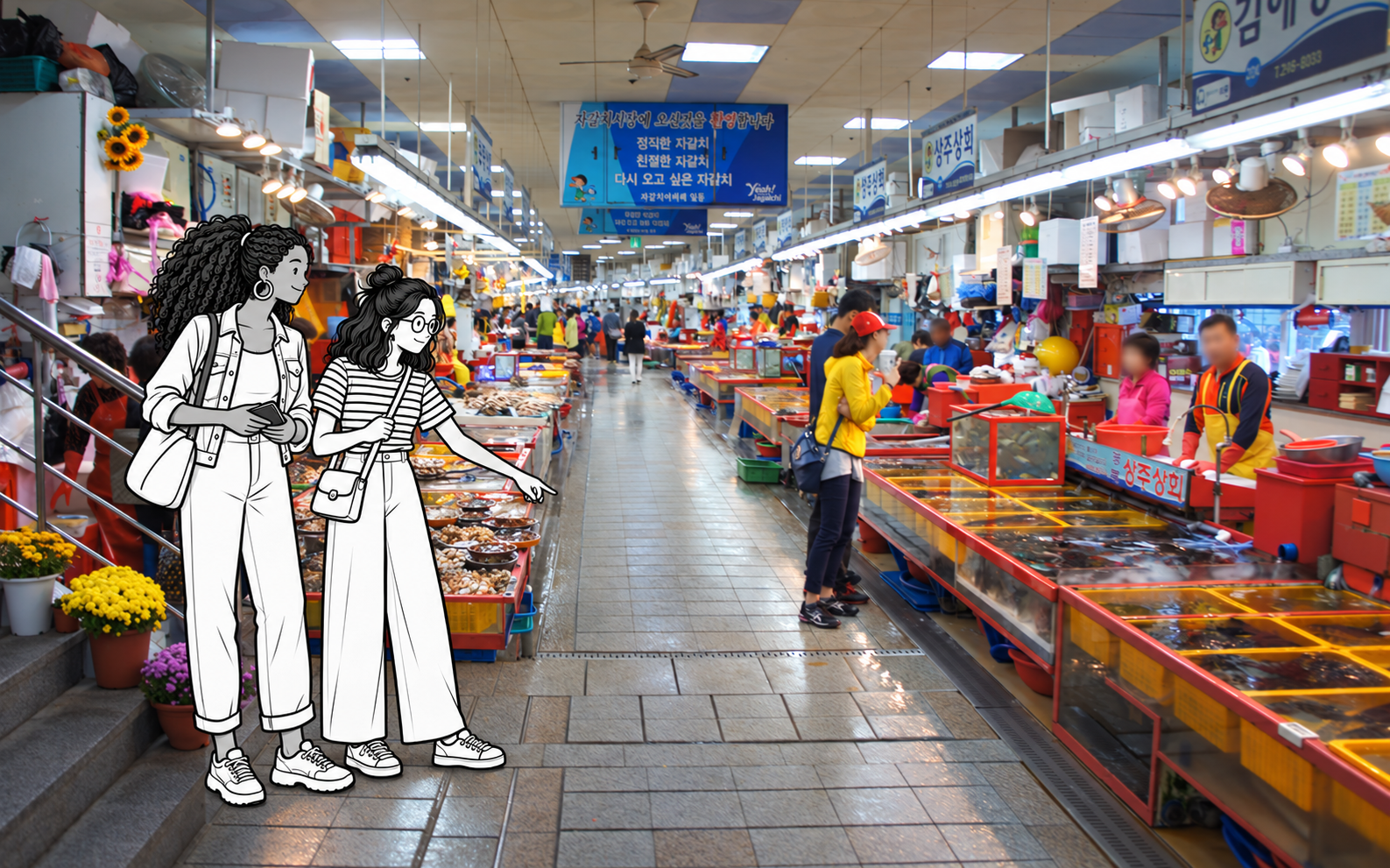
Keep Nampo and Jagalchi in one market-and-harbor block, with time to browse and ask food questions.
AI-assisted photo-based composite. Jagalchi market source photographed 2014; stalls and signs are historical and may be simplified in the AI-assisted composite. No vendor recommendation or current price shown. Background: Inside Jagalchi Market in Busan.png by Tracy Hunter / Wikimedia Commons, CC BY 2.0. Cropped/reframed and edited with AI-generated character overlays; small background details may differ.
Visit Gamcheon as a hillside neighborhood, not only a photo stop
Gamcheon Culture Village is one of Busan’s most recognizable attractions, but it is still a lived-in hillside area. Visit Busan and local official sources frame it as a village art and tourism area, but visitors should still move carefully, keep noise down, and respect residential spaces. The slopes and alleys are part of the experience.
A short focused walk is better than rushing through every viewpoint. If you buy a map or follow a route, use it to avoid random wandering into private-feeling lanes. Combine Gamcheon with Nampo or Songdo rather than Haeundae if you want a cleaner day.
Use Taejongdae or Yeongdo when you want coastal drama
Taejongdae and Yeongdo are useful when you want Busan’s cliffs, sea wind, and maritime atmosphere rather than another shopping or beach stop. Busan’s official geopark information highlights Taejongdae as a coastal landscape, and it works best when the weather is clear enough to enjoy viewpoints and walking.
Do not add Taejongdae at the end of an already packed day unless you are comfortable with transit time and walking. It deserves its own coastal block or a carefully planned half-day.
Once you have chosen your paid attractions, use the Visit Busan Pass comparison to check whether a time-based or attraction-count pass fits the route.
Common Busan attraction mistakes
The first mistake is underestimating distance. Busan attractions are spread along the coast and across hills, so moving from Haeundae to Gamcheon to Taejongdae to Gwangalli in one day can become transit-heavy. The second mistake is choosing a hotel without matching it to the attraction cluster. The third is visiting beaches only at midday and missing the better evening rhythm.
The fourth mistake is treating hillside villages and markets as sets for photos rather than working neighborhoods. Keep the route respectful and practical.
Where to stay in Busan
Before you lock in a route, decide which Busan neighborhood to book, because the city is spread along the coast.
FAQ
What is the best first attraction in Busan?
Haeundae is the easiest first attraction if you want a beach-and-city start. Nampo and Jagalchi are better if you want market and harbor atmosphere first.
Can I see Busan without a car?
Yes. Busan can be visited by metro, buses, taxis, and walking, but attraction grouping matters because the city is spread out.
Is Gamcheon Culture Village worth visiting?
Yes, if you enjoy hillside views, village alleys, and slow walking. Go respectfully because it is not just a photo set.


