
Quick summary: Jeju attractions should be planned by island region and transport mode, not by a simple top-10 list. Seongsan Ilchulbong and Udo fit the east, Hallasan needs trail and weather planning, waterfalls and Jungmun fit the south, and beaches or tea fields often fit the west. First-time visitors should choose two or three regional clusters and leave weather buffers.
Best first Jeju cluster: east coast with Seongsan Ilchulbong and optional Udo.
Best nature commitment: Hallasan only when trail, reservation, weather, and fitness all fit.
Best planning rule: avoid crossing the whole island multiple times in one day.
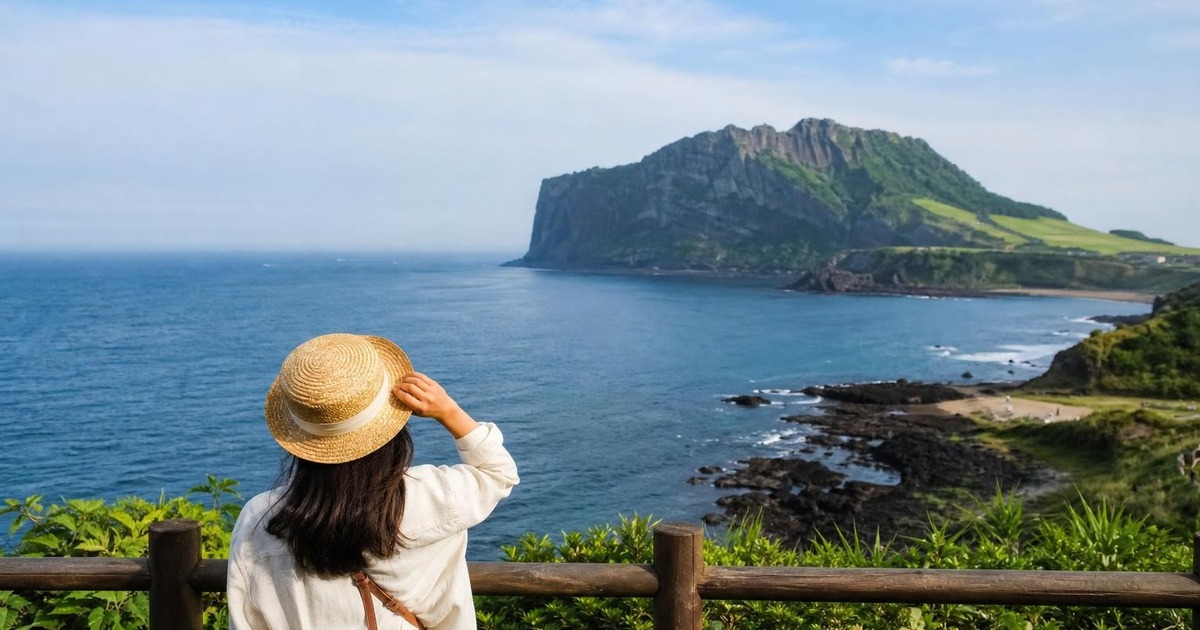
Short answer: which Jeju attractions should first-time visitors prioritize?
First-time visitors should prioritize Seongsan Ilchulbong or another east-coast landmark, one southern waterfall or coastal area, one west-coast beach or viewpoint, and Hallasan only if they genuinely want a hiking day. Jeju is not a subway city. The best attractions depend on where you stay, whether you drive, and how much weather risk you can absorb.
If you prefer a slower framework, read Jeju without over-planning and the broader Korea regional travel guide.
Jeju attraction clusters
Area | Good first-time stops | Best for | Planning note |
|---|---|---|---|
East Jeju | Seongsan Ilchulbong, Udo, coastal roads | Volcanic views and island feeling | Ferry, weather, and bus/taxi timing matter. |
Central / Hallasan | Hallasan trails, forest roads, viewpoints | Hiking and nature | Check reservation and weather before committing. |
South Jeju | Seogwipo, waterfalls, Jungmun, coastal cliffs | Waterfalls and resort-zone access | Works well from a Seogwipo base. |
West Jeju | Hyeopjae, Geumneung, tea fields, sunset coast | Beaches and slower scenic days | Harder to combine with far east in one day. |
Use Seongsan Ilchulbong as the east-coast anchor
Seongsan Ilchulbong is one of Jeju’s clearest first-time anchors because it is visually distinctive and officially framed as a major natural attraction. Visit Jeju describes its volcanic formation and tourism context, and many visitors pair it with east-coast stops or Udo. The main planning issue is distance from your base.
If you stay in Jeju City or Seogwipo, reaching Seongsan takes time. Do not combine it with far-west attractions unless you have a driver, a very long day, and realistic expectations. If sunrise timing matters, check current official access information instead of relying on old blog posts.
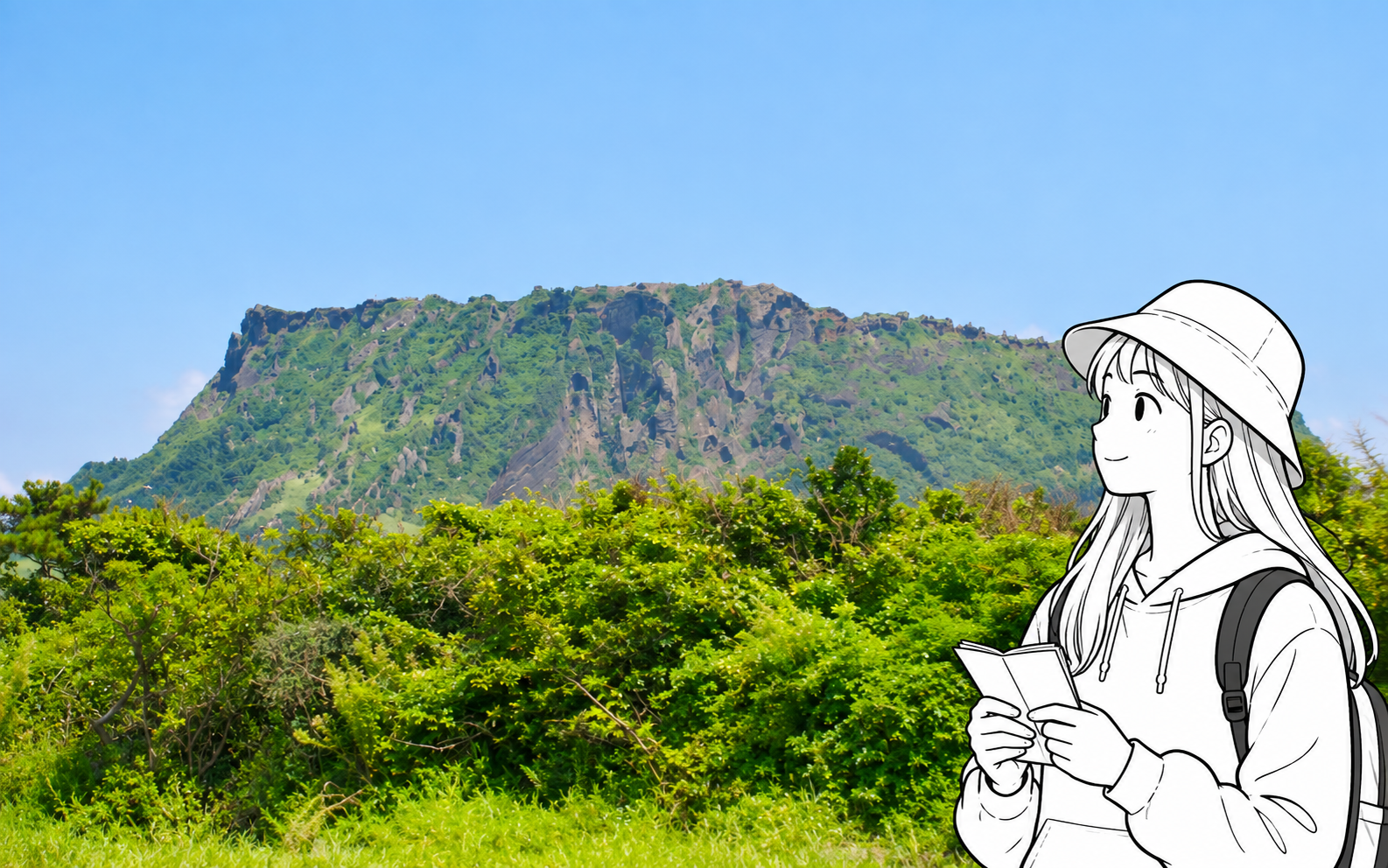
Use Seongsan as an east-coast anchor, then choose nearby stops instead of crossing the island repeatedly.
AI-assisted photo-based composite. Historical road-view photo from 2007; conceptual itinerary illustration, not a marked trail or current access map. Background: Seongsan Ilchulbong from the road.jpg by Yoo Chung / Wikimedia Commons, CC BY-SA 3.0. Cropped/reframed and edited with AI-generated character overlays; small background details may differ. Derivative illustration under CC BY-SA 3.0.
Treat Hallasan as a hiking decision, not a casual stop
Hallasan can be the highlight of Jeju for hikers, but it is not a casual add-on. Trail choice, reservation requirements, weather, fitness, start time, and transportation all matter. The official Hallasan trail reservation system is the starting point for summit-focused planning, and conditions can change by season.
If you do not want a full hiking day, choose easier forest, coastal, or oreum-style alternatives instead of forcing Hallasan. A non-hiking Jeju trip is still valid.
Use the south and west for slower scenic days
South Jeju and western Jeju are useful when you want waterfalls, coastal cliffs, beaches, tea fields, or sunset-oriented routes. These areas reward slower pacing because stops can be spread out and weather can change the mood quickly. If you stay in Seogwipo, south-coast planning becomes easier. If you stay near the airport, west or northwest routes may be easier than far-east routes.
Do not build a day from scattered Instagram spots. Choose one side of the island and let the route breathe.
Transport decides the real itinerary
Jeju attraction planning starts with transport. A rental car gives flexibility but adds license, insurance, parking, navigation, and fatigue questions. Buses can work for some routes but require patience and time. Taxis and private drivers reduce stress but cost more. Tours can be efficient when you want several distant stops without driving.
If you are unsure, choose fewer attractions and a better base rather than trying to solve Jeju by force. The island is more enjoyable when you leave space for weather and distance.
Common Jeju mistakes
The first mistake is booking one hotel and planning daily loops to every side of the island. The second is adding Hallasan without checking trail and weather conditions. The third is assuming Udo, Seongsan, waterfalls, and west-coast beaches can all fit comfortably in one day. The fourth is not having a rain backup.
The fifth mistake is copying a car-based itinerary when you are using buses. Always translate attraction lists into actual transport time before booking.
FAQ
How many days do I need in Jeju?
Three nights is a practical minimum for a first visit. Two nights can work for one side of the island, but it will feel selective.
Do I need to rent a car in Jeju?
No, but a car or driver makes many routes easier. Without a car, choose fewer regional clusters and build in more time.
Is Hallasan worth it for first-time visitors?
Yes if you enjoy hiking and can plan the trail properly. If hiking is not a priority, Jeju has many coastal and volcanic attractions that require less commitment.


